

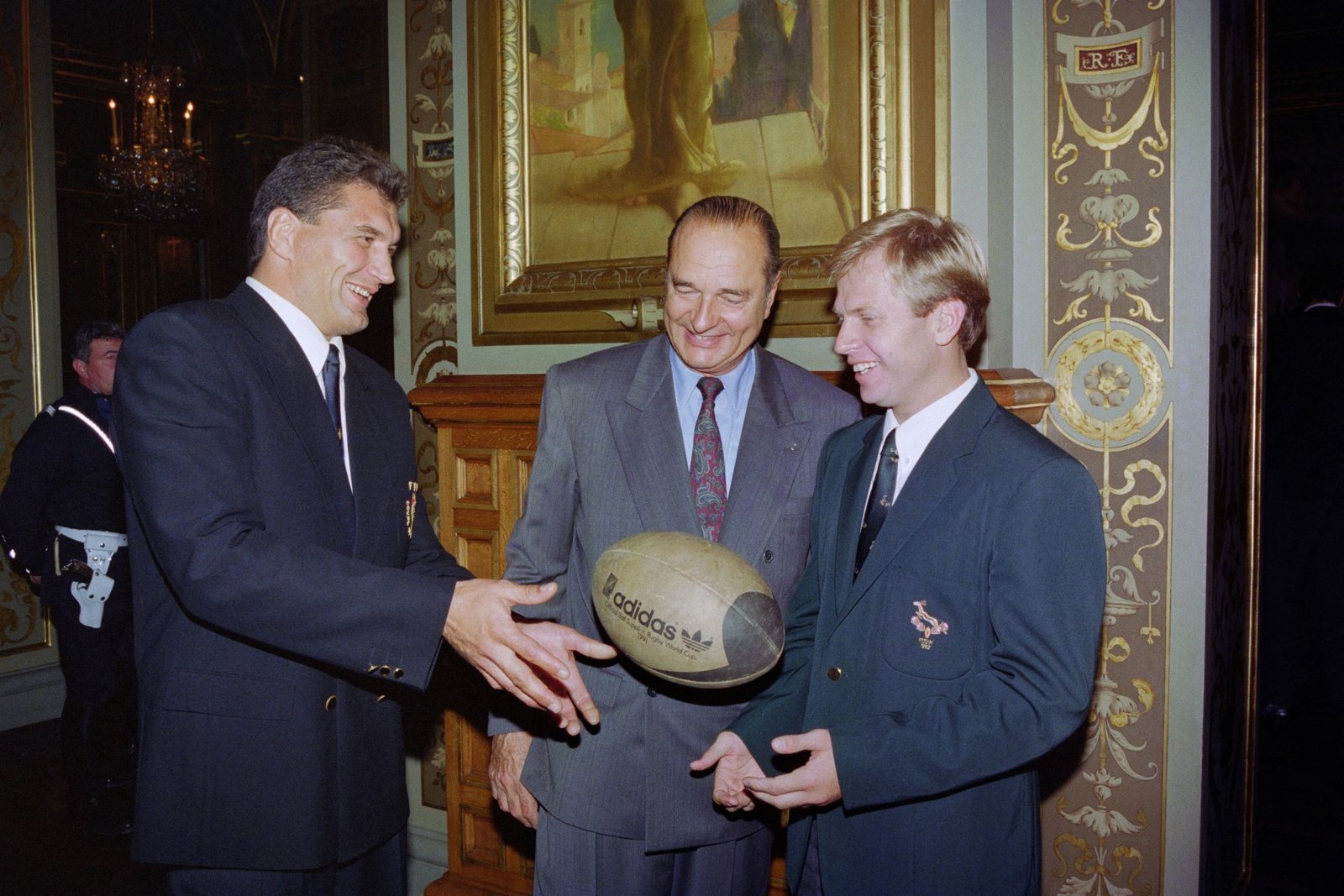
One of South African rugby’s most iconic flyhalves has swapped the highveld for the American heartland. Naas Botha, the legendary Springbok pivot whose boot terrorised opposition teams for nearly two decades, has landed his first rugby role in the United States after relocating earlier this year.
The former Blue Bulls and Springbok captain will serve as director of rugby for the Kansas City Blues, a club with deep American rugby roots dating back to 1966. For a player whose name remains synonymous with precision kicking and tactical brilliance, it represents a new chapter in a remarkable rugby journey that has spanned continents and generations.
The golden boot that defined an era
To understand the significance of Botha’s appointment, you need to grasp just how dominant he was during his playing days. Between 1977 and 1995, he pulled on the famous light blue jersey of the Blue Bulls 179 times, accumulating an almost obscene 2,511 points. That’s not a typo – two thousand, five hundred and eleven points for a single provincial side.
His international career, though limited by the sporting isolation of the apartheid era, still yielded 312 points across 28 Test matches for the Springboks. Known simply as “Naas” to a generation of South African rugby fans, Botha possessed a kicking game that bordered on the supernatural, equally lethal punting from hand or slotting penalties and conversions from impossible angles.
Opposing teams didn’t just have to contain Botha; they had to ensure they didn’t concede penalties anywhere within his considerable range. Give away a penalty 50 metres out? Naas would slot it. Turn over possession in your own half? Naas would pin you back in your 22 with a perfectly weighted kick. His ability to control territory and accumulate points made him one of the most influential players of his generation.
A new mission in middle America
The Kansas City Blues compete in USA Rugby Division 1, the highest amateur level in American rugby, a competition that sits below the professional Major League Rugby but serves as a crucial breeding ground for talent in a nation where rugby remains a growing sport.
For the Blues, securing someone of Botha’s pedigree represents a massive coup. His experience at the highest levels of the game, combined with his understanding of what it takes to build a winning culture, could prove transformative for a club looking to establish itself as a powerhouse in American amateur rugby.
As director of rugby, Botha will oversee the club’s operations, likely influencing everything from coaching appointments and player development to tactical philosophy and high-performance structures. It’s the kind of role that demands not just rugby knowledge, but organisational acumen and the ability to develop systems that produce sustainable success.
When the Botha family announced their decision to leave South Africa in March, the statement made clear that this wasn’t a purely professional decision. In a country where emigration has become an increasingly common topic of conversation, the Bothas addressed the move with candour and grace.
“South Africa will forever hold a special place in our hearts, and we are grateful for the years we were able to live as part of its culture and community,” the Bothas said in their statement.
“In short, this move is about family and the opportunities that lie ahead. We thank everyone for their understanding, and we will miss you all.”
What this means for American rugby
Botha’s appointment arrives at an interesting time for rugby in the United States. Major League Rugby has established itself as a professional competition, the national teams are becoming increasingly competitive, and the grassroots game continues to grow, particularly in traditional rugby markets like the Northeast and pockets of the Midwest.
Kansas City sits in America’s heartland, where rugby competes with powerhouse sports like American football, basketball, and baseball for athletes and attention. Having a figure of Botha’s stature involved at club level could help raise the profile of the game locally and attract talent that might otherwise gravitate towards more established sports.
KickOff.com brings even more rugby news.
