

Aidan Challinor |

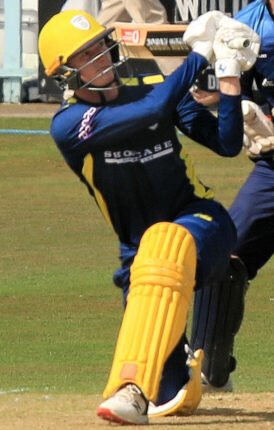
Phil Salt’s quad injury has created an awkward problem for England shortly before their white-ball series against Sri Lanka. It has also opened the door for Aneurin Donald, whose first senior call-up follows an outstanding domestic season with Derbyshire and Trent Rockets.
Donald has been selected for the three T20 internationals beginning at Southampton on 15 September. His inclusion is more than routine injury cover. England need an opener who can attack the powerplay, but they must also decide how much responsibility to give a player entering an established batting group.
The route into an England squad is more visible than it once was. The same phone that carries an online casino can put a county innings in front of supporters and selectors within minutes. Donald’s 91 from 38 balls in the Vitality Blast travelled far beyond Derbyshire’s usual audience, but a viral highlights package will not settle where he should bat against Sri Lanka.
Salt’s absence changes more than one position
Salt provides England with immediate aggression at the top of the order. He is comfortable attacking pace during the first six overs and rarely needs several deliveries to assess conditions.
Removing him creates a vacancy, but it also affects the roles around him. Ben Duckett can open, Jos Buttler has extensive experience there and Will Jacks is another credible option. Donald joins a squad containing several players who could perform the same job on paper.
That does not make the choice straightforward. Moving Buttler to the top could weaken the middle order, particularly if Harry Brook wants an experienced batter available during the final ten overs. Asking Jacks to open may reduce England’s flexibility against spin later in the innings.
Duckett appears the least disruptive choice. He can begin against the new ball while retaining the option to manipulate spin if Sri Lanka introduce Maheesh Theekshana during the powerplay. Donald could then enter later, although that would move him away from the role that earned his selection.
England therefore need to decide what they want to learn during the series. Selecting Donald without giving him a genuine opening opportunity would reveal little about his international potential.
Donald’s power comes with a clear tactical question
Donald’s appeal is obvious. He can score quickly without relying on one part of the ground, and his aggressive approach suits an England side that does not want to spend the powerplay protecting wickets.
International bowlers will examine his method more closely than most domestic opponents. Sri Lanka can test him with Theekshana’s variations, Wanindu Hasaranga’s leg spin and changes of pace from a varied seam attack.
Donald may find that boundary balls are less frequent. He will need to show that he can rotate the strike when the fielding side removes his preferred scoring areas.
His innings of 91 from 38 balls demonstrated his hitting range, but the most useful evidence in this series may come when an attack slows him down. A ten-ball spell without a boundary can reveal more about a new international batter than a rapid start on a flat pitch.
The opening T20 at the Utilita Bowl should offer England an opportunity to test that adaptability. Donald could face Dushmantha Chameera’s pace before dealing with Theekshana or Hasaranga as soon as Sri Lanka sense an opening.
Sri Lanka are well equipped to examine a new opener
Sri Lanka arrive with a bowling group capable of changing pace and angle throughout an innings. Chameera can trouble batters with speed, Nuwan Thushara offers an unusual slingy release and Binura Fernando provides a left-arm option.
Their spin resources may be even more important. Theekshana is comfortable operating with the new ball, while Hasaranga remains a wicket-taking threat once the field spreads. Dunith Wellalage gives captain Kusal Mendis another left-arm spin option.
That variety prevents England from preparing Donald for one predictable challenge. If he opens, he could face seam at one end and mystery spin at the other. A batter making his debut cannot simply wait for a favourable match-up.
Sri Lanka also have reason to approach the series with confidence. They recently won their ODI series against the West Indies, although they lost the T20 contest. Pathum Nissanka’s form gives them an attacking presence at the top, while Kusal Mendis, Kamindu Mendis and Charith Asalanka add experience.
England cannot treat the matches as a relaxed late-season experiment. Sri Lanka have not won a series against them in 12 years, but their squad contains enough variety to punish uncertain selection and careless batting.
Buttler’s role will influence the entire order
Jos Buttler remains central to England’s plans even though Harry Brook now holds the captaincy. The question is where his experience carries the most value.
Opening with Buttler would give England a proven replacement for Salt. It could also allow Donald to watch the first match before entering the side later in the series.
The drawback is that England would lose Buttler’s control during the middle and closing overs. Brook is a destructive batter, but the absence of Salt and the injured Jacob Bethell already removes two important options. Sam Curran is also unavailable, reducing the depth of the side.
Tom Banton and Jordan Cox can take middle-order positions. Jamie Overton’s return after a thigh injury strengthens the lower order and gives Brook another pace-bowling option. Even so, Buttler’s ability to manage an innings remains difficult to replace.
A Duckett and Donald partnership would preserve Buttler’s later role. It would also give England a left-hand and right-hand combination, complicating Sri Lanka’s bowling plans during the powerplay.
That pairing carries greater uncertainty, but uncertainty is part of the reason to select a new player. England already know what Buttler can provide as an opener.
England should give Donald a defined job
New batters are often asked to remain flexible, yet too much flexibility can become a lack of clarity. Donald will have a better chance if England tell him exactly how they expect him to approach the first six overs.
He should not be required to reproduce Salt’s method delivery for delivery. Salt’s strength comes partly from experience against international attacks. Donald needs enough freedom to use the qualities that brought him into the squad.
A defined role could involve attacking pace inside the powerplay while allowing Duckett to take more responsibility against spin. England could reverse those duties if Theekshana opens the bowling.
Brook must also avoid treating every aggressive shot as proof that the plan is working. Powerplay batting depends on choosing the right bowler and length to attack. Three quiet deliveries followed by a calculated boundary can be more valuable than forcing a low-percentage option.
The three-match format gives England room to make a proper assessment. After Southampton on 15 September, the series moves to Cardiff on 17 September and Manchester on 19 September. Donald should receive more than one innings if he is selected.
The ODI squad presents a separate opportunity
Donald has only been included in the T20 group. Henry Crocombe, the uncapped Sussex seamer, receives his first ODI call-up for the matches at Chester-le-Street, Headingley and The Oval.
That separation makes sense. Donald can focus on a format suited to his recent domestic performances, while England retain Joe Root for the longer white-ball game.
A strong T20 series could still influence future ODI discussions. England’s approach increasingly favours batters capable of changing the scoring rate quickly, and Donald’s power would be useful if his game develops beyond the powerplay.
There is no need to rush that conversation. His immediate task is to show that his attacking method survives the jump in bowling quality.
Salt’s injury has forced England to alter their plans, but it has also given them a useful chance to test their depth. Donald has earned the call through specific domestic performances. The next step is equally specific: give him a place at the top, a clear instruction and enough time to show how he responds when Sri Lanka change the problem in front of him.
