

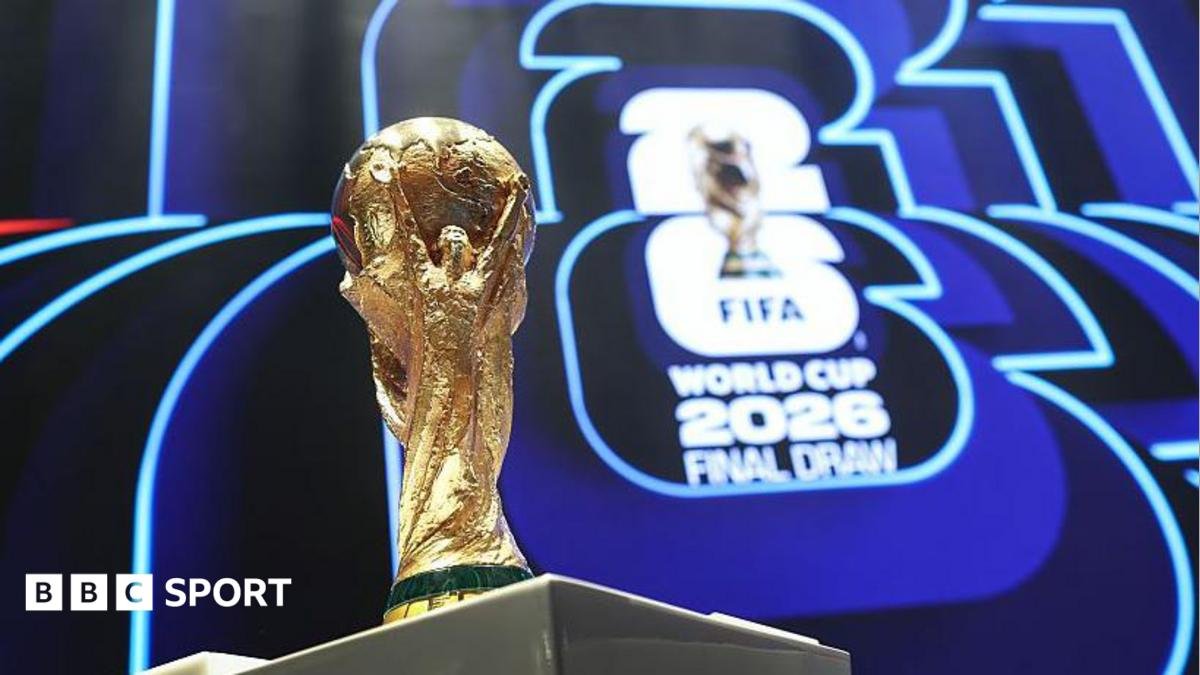
Expanding the World Cup to 48 teams always presented one obvious problem – it was an imperfect number for a tournament.
With 32 teams, the maths was simple – eight groups of four teams, with the top two going through to a last 16, then quarter-finals, semi-finals and a final.
By adding another 16 nations, Fifa had to find a way to get to a symmetrical knockout stage. There was no ideal solution – one which preserved the intensity of the previous format.
The original plan was to create 16 groups of three teams. The two top in each would go through to the last 16.
But there was an issue. Three-team groups meant individual fixtures – and those in the final match would know exactly what they needed to do to qualify. Nations could play for specific results to secure their passage to the knockout rounds.
Fifa, after all, knew all about alleged collusion from the scandal at the 1982 World Cup. Back then, with groups of four, teams did not play their final group matches at the same time.
West Germany faced Austria in the standalone last game. A slender win for the Germans would send both teams through at the expense of Algeria. The match finished 1-0 to West Germany. Algeria went out.
Fifa changed the format so all final fixtures would be played simultaneously, but that would not have been possible with three-team groups.
The climax to the group stage in Qatar was so exciting that Fifa had a rethink. It accepted there must be 12 four-team groups and two matches would be played at the same time to determine who would qualify.
Except for one crucial difference – something that removed much of the jeopardy that made the last World Cup so gripping.
Eight of the third-placed teams must go through for there to be 32 teams in the knockout rounds. It became harder to be knocked out than to progress.
And one issue becomes clear with two matches this week.
First up, Australia played Paraguay on Thursday. The teams were second and third in Group D and both on three points.
Four points is almost certain to be enough to take one of the eight third-placed qualifying slots, so it created a situation in which the teams knew that a draw was helpful to both.
The match finished 0-0.
Australia are definitely through in second place and celebrated with their supporters at the final whistle. Paraguay played it low key but, barring a very unlikely set of results in the remaining groups, they will go through too.
The next game of interest in this respect is Austria v Algeria in Group J (03:00 BST Sunday).
Again, the two teams are second and third on three points. A point is very likely to send both teams through, while defeat is much more likely to send one home.
Will we see another draw?
After being impacted negatively in 1982, Algeria could be the beneficiaries in 2026.
You could argue a game in Group F on Thursday fell into the same category, with Japan starting the match on four points and Sweden on three.
That match also finished 1-1 to guarantee the Scandinavians would progress, but there was no real risk involved for Japan if they have lost.
It is the same in Group L, too, with Ghana on four points and Croatia on three.
