

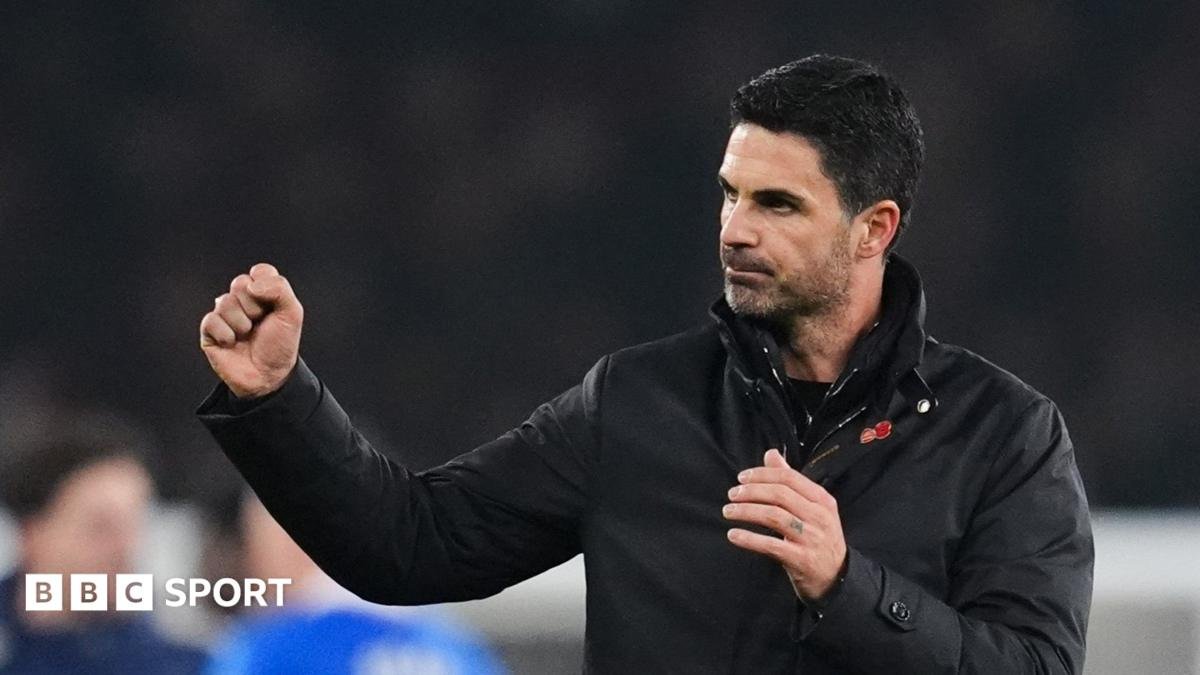
If Arsenal had dropped points, it wouldn’t have been the first time this weekend that a match would have been dominated by discussions about the video officials.
On Friday, Coventry City were denied what appeared to be a clear penalty against Everton for a hair pull by James Tarkowski on Caleb Yirenkyi. Then in the second half, when Thierno Barry scored to put the Toffees 2-1 up and the ball appeared to come off his hand.
The controversy continued in Saturday’s early kick-off between Leeds and Tottenham. First, Leeds wanted a penalty for handball by Mateus Fernandes, though replays did show the ball hit the Spurs player’s shoulder.
Then came the potential red card for a challenge by Jayden Bogle on Mathys Tel, which has split opinion. The VAR, Tony Harrington, eventually decided after a four-minute VAR check that the foul did not have enough force.
That Tel was forced off injured, and referee John Brooks did not even show a yellow card on the field, only added to the frustration for Tottenham.
So on to the Emirates, and again the debate was around VAR.
It’s a situation few would question. After all, an offside player winning a penalty surely goes against the very logic of the law?
If an offside player is running to the ball and is fouled before they attempt to play the ball or challenge an opponent, then the foul is considered to come before the offside offence.
The law seeks to prevent situations whereby defenders have carte blanche to foul attackers, just because the opponent is offside.
But is a complex area of law and is very much open to interpretation.
We have a few past case studies.
In February 2019, the season before VAR came in, an offside Harry Kane was awarded a late penalty in a north London derby after being dragged down by Shkodran Mustafi.
Two years ago, Newcastle were awarded a spot-kick against Bournemouth through a VAR intervention when Adam Smith tugged back an offside Fabian Schar.
Yet last December, after being awarded a penalty against Leeds, Brentford’s Dango Ouattara was ruled to be offside and the spot-kick ruled out through VAR.
So which interpretation is correct? Kane and Schar, or Havertz and Ouattara?
Ouattara was somewhat different, as he appeared to be engaging with Gabriel Gudmundsson as the ball was played.
The Havertz example is more like the one involving Schar, who was running forward when his shirt was tugged back.
But there is an additional consideration, and this is where Oliver’s thinking will lie.
Officials are asked to consider the likelihood of the attacker becoming involved in the play from a second phase. Let’s say the ball could be first played by a team-mate, which then makes them onside. Then they are not purely benefitting from being offside.
In the case of Schar and Kane, they could have benefitted from that second phase.
Havertz was the only attacker who had any chance of being involved in the play, so the VAR determined offside was the fair outcome.
Confused? You’ve got every right to be.
At least tonight most of the talk will be about another victory for Arsenal – and not VAR.
