

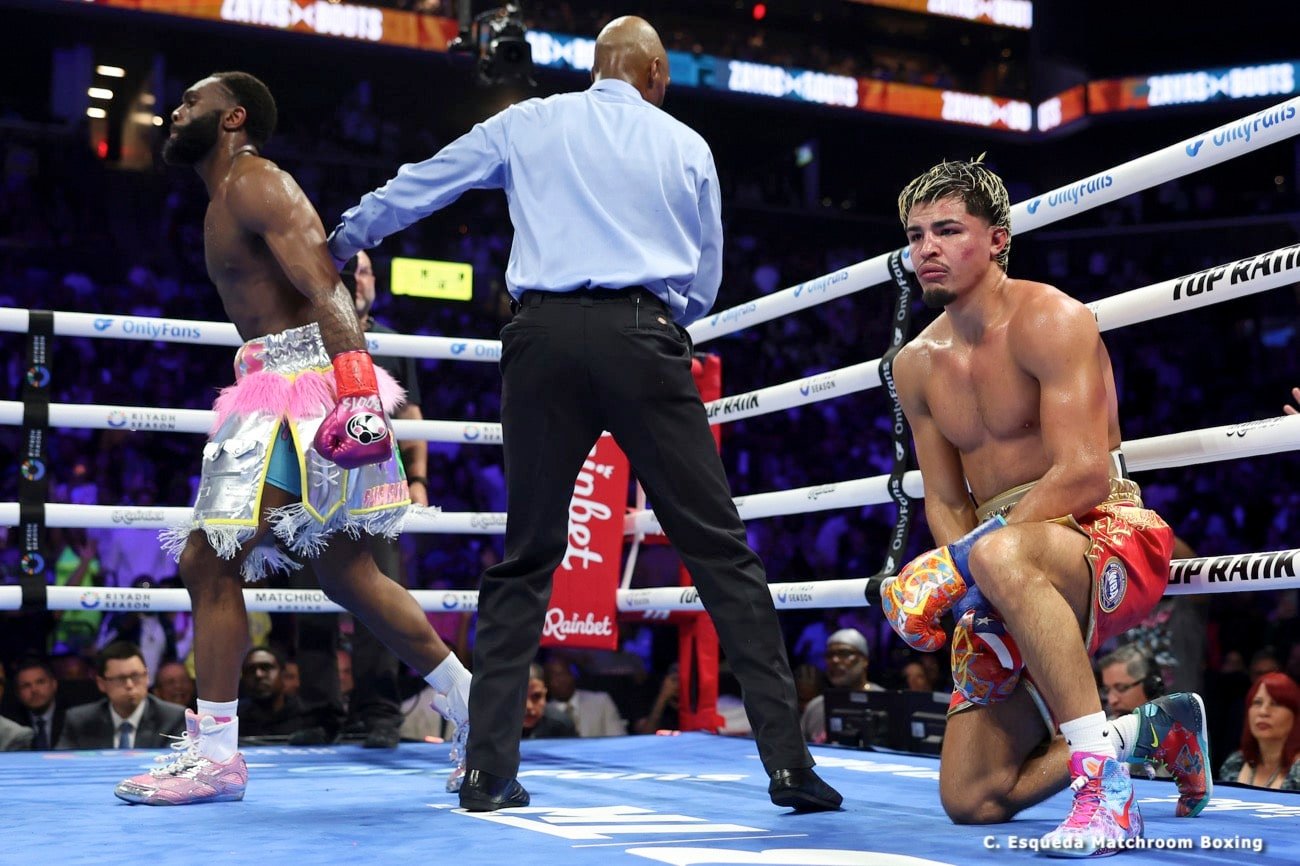


Leaving junior middleweight also separates Zayas from Ennis, the unified champion who just defeated him. Staying there would have left Zayas working beneath a fighter he was unlikely to face again soon. The move offers more room to recover and a less imposing group of titleholders.
Sergio Mora considers Zayas capable of winning a championship at 160 because the division is vulnerable. Carlos Adames remains beyond him at this stage.
The one-fight arrangement also gives Matchroom little reason to take a major risk. A Puerto Rico headliner or place on a large DAZN card allows the company to earn from Zayas before returning him to Top Rank. Protecting him against a manageable opponent makes more business sense than placing him near Adames.
Zayas was not a one-punch finisher at junior middleweight. Most of his stoppages came through combinations and sustained output. At 160, he will face larger opponents who may continue advancing if his punches lack enough force to discourage them. Ennis forced him backward at 154. A full-sized middleweight may apply even greater physical pressure.
Moving up also risks presenting weight as the solution to problems that were largely technical. An easier cut may help Zayas maintain his stamina, but it will not improve his head movement, defensive positioning or ability to escape after exchanging at close range. Those weaknesses become more dangerous against heavier punchers.
The quality of the titleholders gives Zayas a faster route to another championship opportunity, but careful matchmaking can only take him so far. Middleweight may be easier to navigate than junior middleweight. It will not automatically make Zayas a better fighter.

