

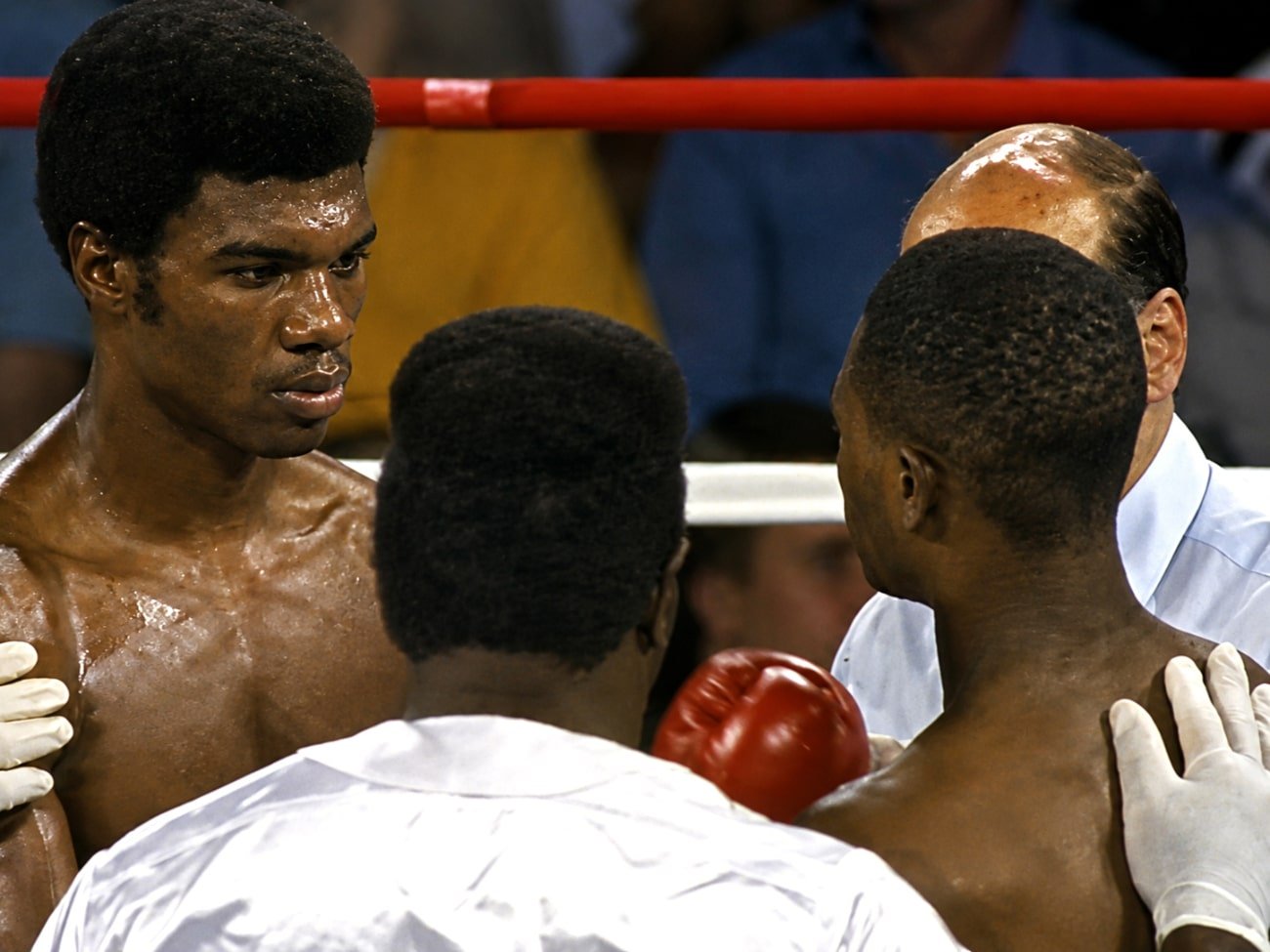


The 22-year-old Terry Norris, who brought a 21-2 record and was viewed as one of America’s brightest young prospects. Blessed with blazing hand speed, quick feet and sharp combinations, Norris appeared to have the exact style capable of neutralizing Jackson’s legendary power, as long as he avoided making one mistake.
The WBA junior middleweight championship was on the line, but the fight also represented a crossroads for both men.
Jackson wanted to continue establishing himself as the division’s dominant champion before eventually pursuing opportunities at middleweight. Norris saw the bout as his chance to become the youngest world champion in one of boxing’s deepest weight classes and announce himself as the sport’s next star.
It was the classic boxer-versus-puncher matchup. Norris needed to win virtually every minute. Jackson only needed one opening.
Round 1
The challenger executed his game plan almost perfectly during the opening three minutes.
Norris refused to stand still, circling constantly and forcing Jackson to reset before he could unleash his powerful right hand. Norris repeatedly landed fast combinations and was gone before Jackson could set his feet.
Sharp right hands and fast flurries repeatedly found their mark as Jackson struggled to cut off the ring.
Rather than engaging in prolonged exchanges, Norris boxed intelligently from range, frustrating the champion while building an early lead. Jackson landed little of significance as Norris comfortably claimed the first round on all three judges’ scorecards.
For three minutes, it looked like youth, speed and movement might solve one of boxing’s greatest punchers.
Round 2
Everything changed in an instant.
About halfway through the round, Norris drifted backward toward the ropes while continuing to move laterally. As he did, he briefly lowered his left hand.
Jackson saw the opening immediately.
The champion launched a thunderous overhand right that crashed into Norris’s chin, instantly rendering the challenger unconscious on his feet. Jackson followed with a crushing left hook and another right hand as Norris collapsed face-first onto the canvas.
Although Norris somehow struggled to his feet at the count of nine, his eyes were vacant and his legs unsteady. Referee Joe Cortez took one look at the badly hurt challenger and waved the fight off at 1:33 of the second round.
Jackson had erased an otherwise difficult fight with one explosive sequence.
Afterward, the champion summed it up simply.
“I hit him with three punches, but I knew he was out after the first one. The kid had heart.”
The Aftermath
Jackson retained his WBA junior middleweight title with one of the signature knockouts of his career, further cementing his reputation as perhaps the most dangerous one-punch finisher in boxing. He later moved up to middleweight, captured the WBC title and defended it multiple times before eventually losing the championship to Gerald McClellan in 1995. Jackson retired in 1998 with a remarkable 55-6 record, including 49 victories by knockout, and remains widely regarded as one of the hardest punchers pound-for-pound in boxing history.
For Norris, the defeat marked the first knockout loss of his professional career, but it proved to be only a temporary setback rather than a career-defining disappointment.
Just two years later, Norris defeated an aging Sugar Ray Leonard to win the WBC junior middleweight championship, beginning an outstanding title reign that established him among the best fighters of the early 1990s. He finished his career with a 47-9 record, was inducted into the International Boxing Hall of Fame, and is remembered as one of the finest junior middleweights of his era.
The fight itself lasted less than five minutes, but it perfectly illustrated the timeless truth about Julian Jackson: against “The Hawk,” no opponent was ever truly in control. Norris boxed brilliantly for one round, only to discover what so many others had learned before him—that one lapse in concentration against Jackson could end a fight instantly.

