

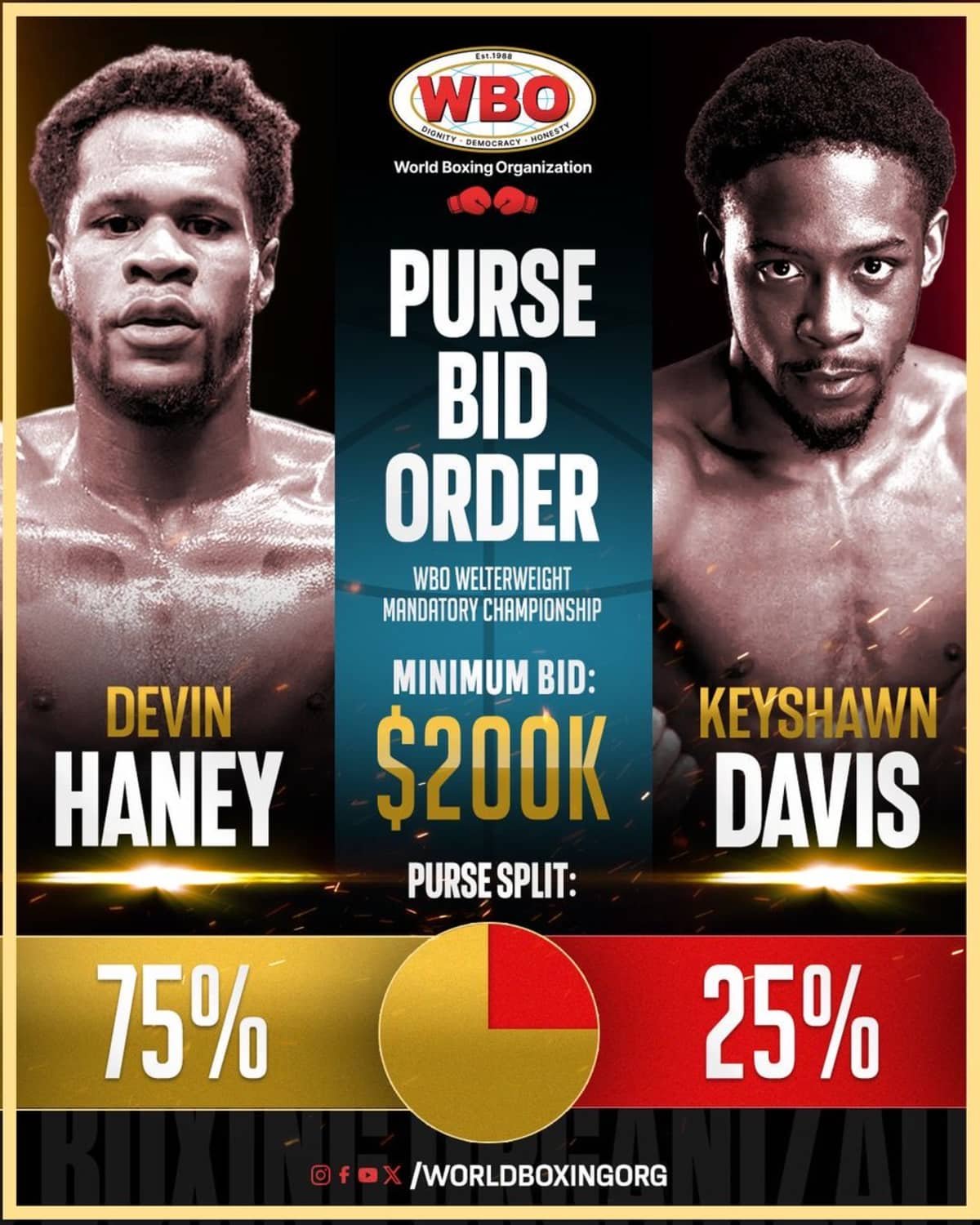


Unlike many negotiations where challengers push for a larger share, the WBO has already settled the financial split. The purse bid won’t change that. It will only determine which promoter wins the right to stage the fight if voluntary talks break down. That leaves Haney with little reason to feel pressured.
If he likes the offer presented during negotiations, he can move forward with the mandatory. If he doesn’t, he still has options. Haney can continue discussions before the deadline or even choose to vacate the WBO welterweight title and pursue another fight if he believes bigger opportunities exist elsewhere.
The purse bid doesn’t force Haney into accepting unfavorable financial terms because those terms have already been established.
The timing also complicates Shakur Stevenson’s hopes of landing a fight with Haney. Shakur recently urged Haney to face Keyshawn, saying he doesn’t believe his close friend would lose. If Haney fulfills his WBO mandatory, a fight with Shakur moves farther down the road.
That’s another reason the purse bid carries more importance than the WBO’s announcement alone.
The mandatory for Keyshawn represents his quickest route to a world title. The purse split, however, reflects the reality of his position as the challenger. Unless an agreement is reached before July 27, the winning promoter will secure the promotional rights, but the 75-25 split remains unchanged.
The WBO’s announcement doesn’t guarantee Haney and Keyshawn will meet in the ring. What it does guarantee is that Haney holds the leverage as the purse bid approaches.
Every championship follows a process. ✍️
The WBO World Championship Committee has established the minimum bid and purse distribution for the WBO Welterweight Mandatory Championship purse bid proceedings. 🥊#BeltsMatter pic.twitter.com/MMP8k73SkJ
— WBO (@WorldBoxingOrg) July 20, 2026
