

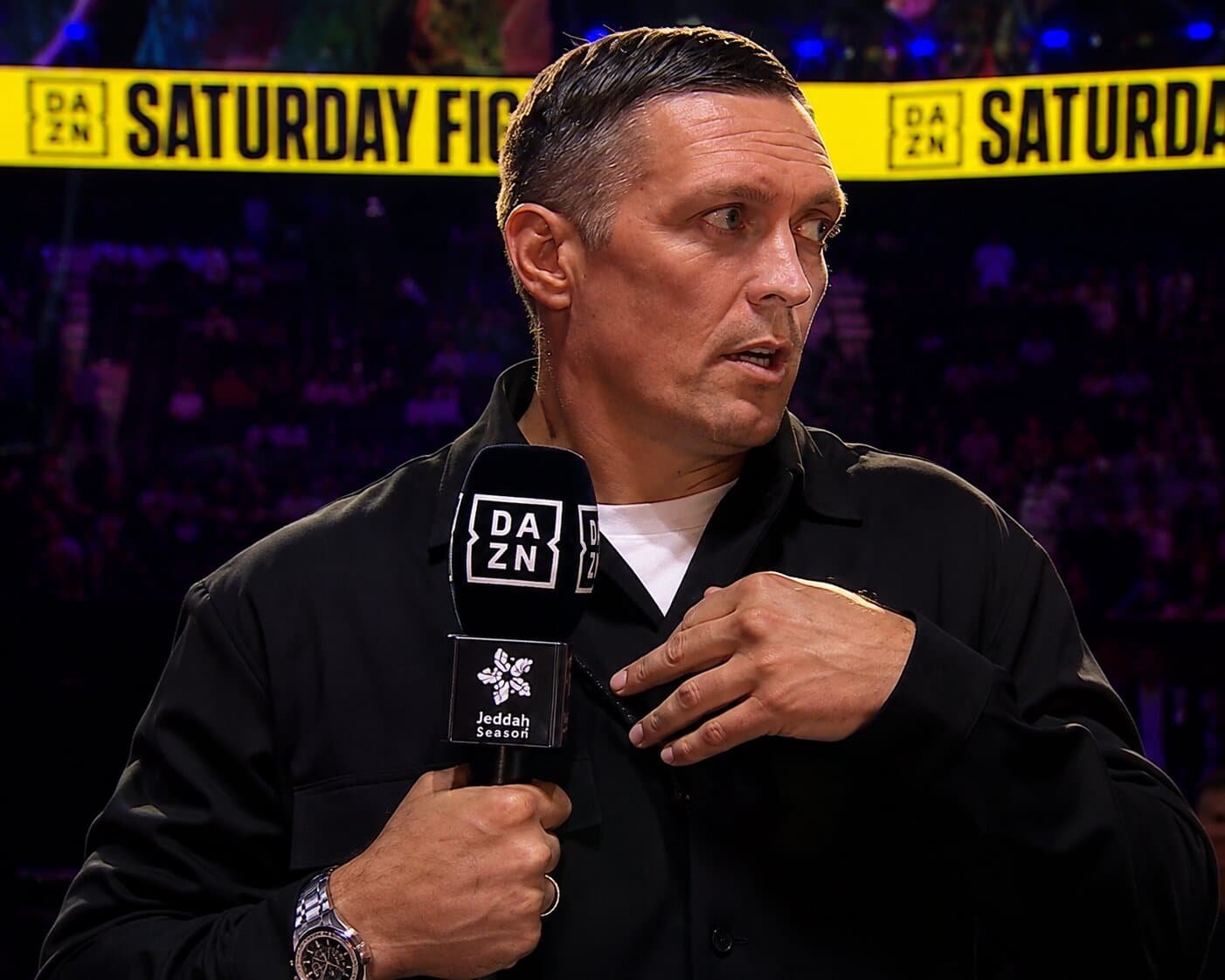


Usyk is almost perfectly equipped to deepen that hesitation. His lateral movement keeps him away from the straight center line Wilder needs for his power shot. The southpaw jab, constant feints, and changes of direction would force Wilder to restart his attack repeatedly. Parker and Zhang made him reluctant to throw. Usyk may reduce him to following, watching, and losing rounds without mounting a sustained attack.
An X poster named PA98 raised the question Usyk’s supporters rarely want to answer:
“Why can’t he fight the up-and-comers and pass the torch in the ring like the greats of the past did? Why does Usyk get a pass?”
That pass comes from an exceptional career. Usyk became undisputed at cruiserweight, defeated Anthony Joshua twice, beat Tyson Fury twice, and stopped Daniel Dubois twice. Those accomplishments allow his fans to treat almost any late-career selection as a deserved reward. Wilder still is not the strongest available opponent.
Old school champions believed in an unwritten law of the ring: you inherit the crown by beating the man, so you pass it along by giving the next generation their shot. Joe Louis did not look for a soft touch when his legs went. He stepped in there with a prime Rocky Marciano. Muhammad Ali took on Larry Holmes and Trevor Berbick. Sugar Ray Robinson and Henry Armstrong fought killers until the wheels fell off completely. Those legends did not obsess over protecting an unblemished modern record. They understood boxing as an unbroken chain where lineage gets passed inside the ropes.
Today, elite fighters protect their record like a museum artifact. By selecting Wilder, Usyk gets the marquee US market attraction without having to survive thirty-six minutes of relentless body punching from someone like Kabayel. Wilder is forty years old, inactive, gun-shy, and tailor-made for a southpaw mover. It gives casual viewers the spectacle of an Olympic gold medalist versus an explosive puncher, but purists see it for what it really is: an exit strategy designed to collect a final check with minimal physical punishment.
If Usyk wants his heavyweight run to stand shoulder to shoulder with the all-time greats, he should be testing himself against the top contenders who earned their spot in line. Picking Wilder is pure business, not championship tradition.
It leaves a sour taste for so many diehard observers. When a champion reaches the mountaintop, their final bouts define whether they view the sport as an unbroken tradition or simply as a curated brand.
Choosing a forty-year-old Deontay Wilder who has shown deep hesitation in recent bouts sends an unmistakable message: the priority is safeguarding the zero on the record rather than giving the hungry tier beneath him a real shot.
When fans and historians look back decades from now, they will see that Usyk conquered his immediate contemporaries in Joshua, Fury, and Dubois. But they will also see that when the true younger threat level started rising with prime, physically grueling fighters like Kabayel or Hrgovic, Usyk chose the safest household name available on the American market.
Greatness in boxing has always been cemented by daring to go out on your shield against the next wave. Choosing a recognizable puncher whose best days ended years ago allows a fighter to walk away rich and unblemished, but it certainly strips away the pure competitive honor that defined the legends of the past.
