

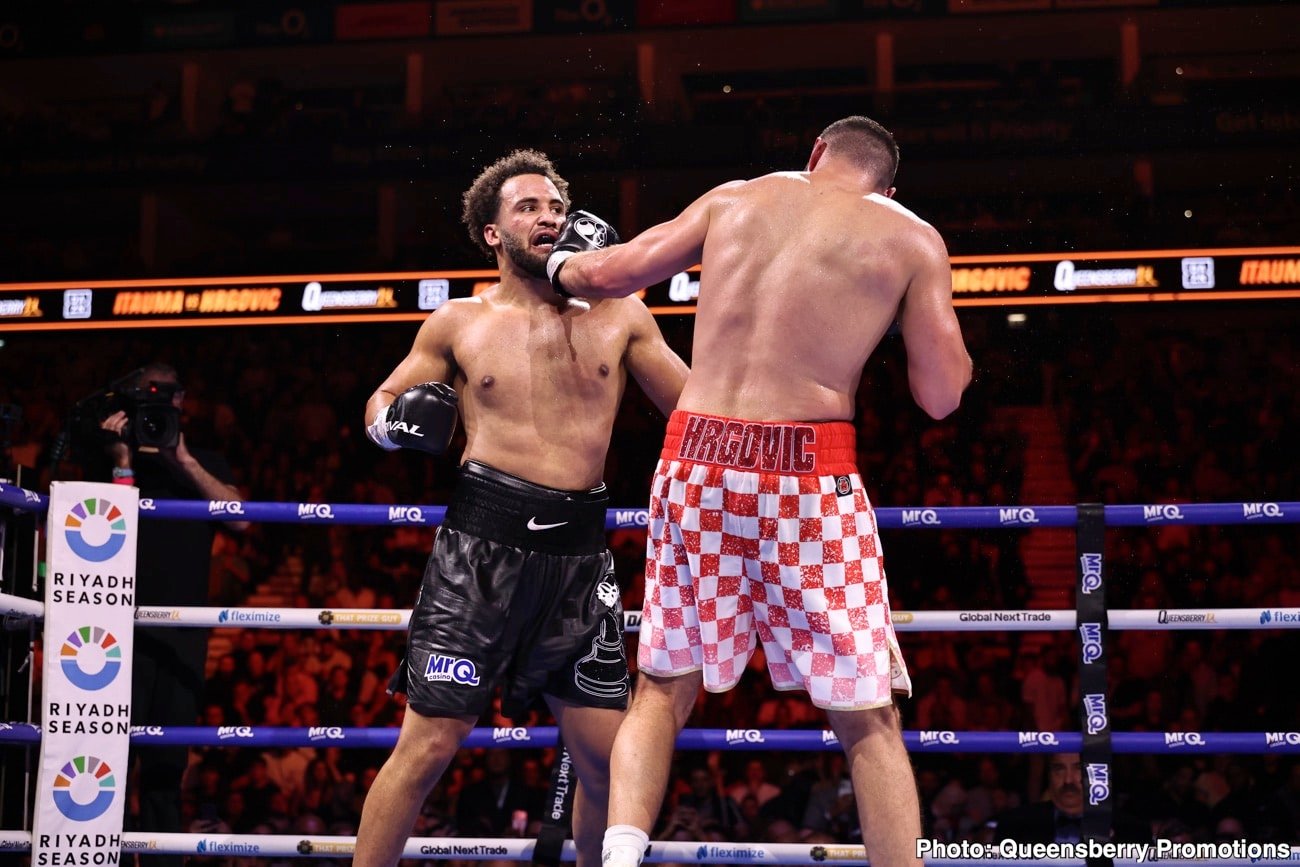


In Bradley’s view, Itauma mistook offensive talent for ring intelligence.
“If you’ve got a high boxing IQ like they say you do, now, you’ve got skills. Your boxing IQ is marginal, bro, and your corner is even worse,” said Bradley on his channel. “You didn’t see this dude just playing defense on you. That’s all he was doing. You’re working your ass off trying to force a knockout. That’s what happens when you try to force a knockout.”
The harshest criticism was reserved for trainer Ben Davison and the rest of Itauma’s corner. Bradley argued that they failed to prepare him mentally, tactically, and physically for a 12-round heavyweight title fight.
He also rejected the idea that Itauma’s lack of professional rounds fully explained what happened. Heavyweights are supposed to build endurance in camp, Bradley said, recommending four-minute sparring rounds with 30-second breaks to teach pacing and strengthen conditioning.
That argument only goes so far. Itauma had completed just 31 professional rounds before facing Hrgovic and had never boxed beyond the sixth. Twelve stoppages in his first 14 fights allowed him to develop his finishing ability without teaching him how to dismantle a durable opponent who refused to fall.
The second-round knockdown also changed Itauma’s punch selection. His jab became less important as he loaded up on hooks, uppercuts, and straight left hands. Without the lead hand controlling distance, Hrgovic had more time to read the attacks and fewer reasons to remain cautious.
Defensive resets between combinations soon disappeared. When Itauma’s punches were sharp, his speed carried him out of danger. Once they lost their snap, he remained within Hrgovic’s range without the head movement or lateral footwork needed to avoid the return fire.
Hrgovic’s composure made those errors more costly. His Olympic background and experience against Daniel Dubois, Zhilei Zhang, and other seasoned heavyweights taught him that losing early rounds did not require an immediate tactical change. He protected himself, kept advancing, and waited for Itauma’s output to fall.
By the middle rounds, Davison’s team should have recognized the physical decline. Itauma no longer needed instructions aimed at producing a stoppage. He required a survival plan built around the jab, clinching, controlled movement, and shorter exchanges.
Firing the entire team would be an emotional response to one defeat. Bradley’s larger argument is harder to dismiss. Itauma cannot return to the title level with the same conditioning, all-power punch selection, and dependence on early knockouts. His next phase must be built around pacing and defensive discipline, not another collection of quick finishes.

