

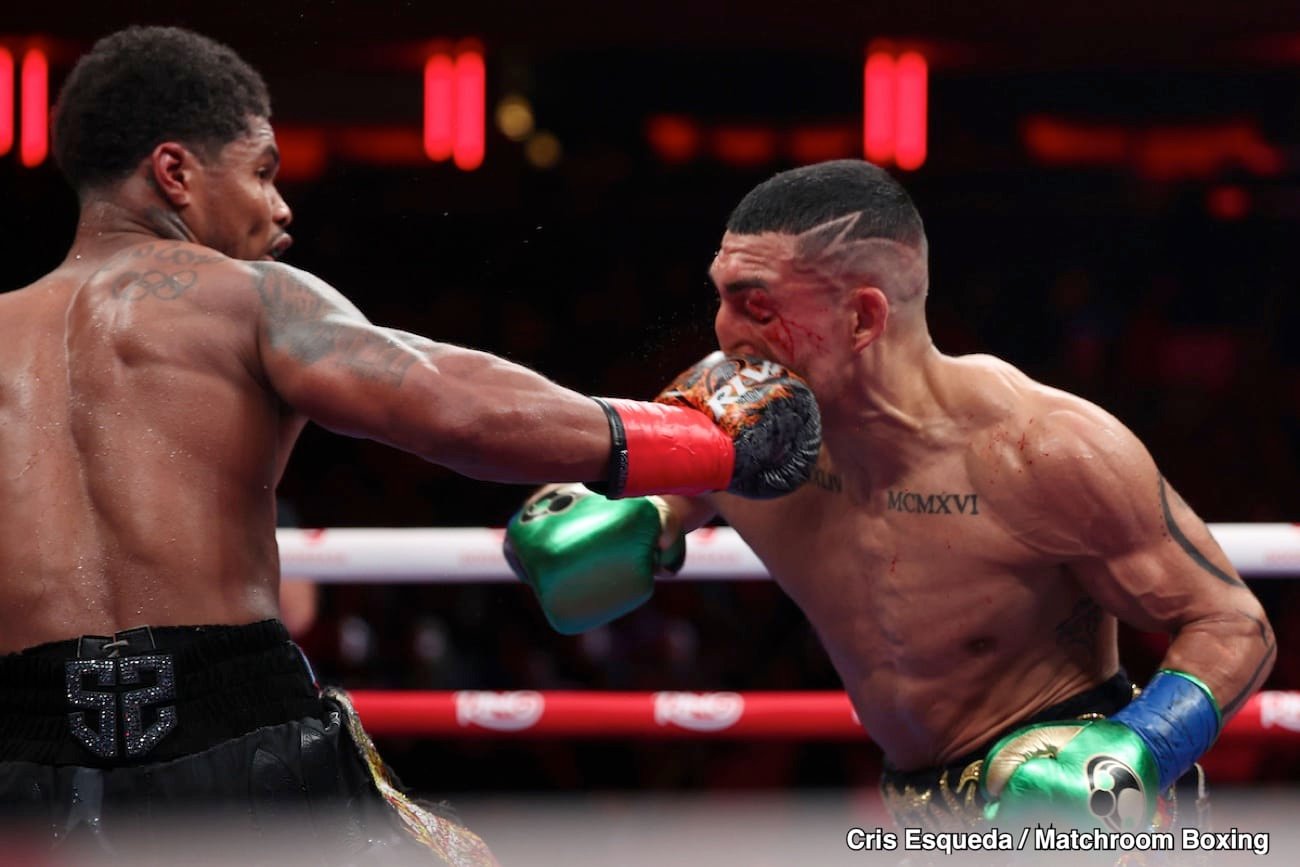


“That’s the sickest [thing] I ever heard,” Shakur said when asked about the criticism. Even if you watch my last fight, I was coming forward. Teofimo was the one that was on the back foot. Why was he backing up?” said Shakur on the 4th and 1 podcast.
Shakur compared his fights to a lopsided basketball game.
“You know what’s boring? When you watch a basketball game, and somebody go up 30 or 40 points, you don’t even want to watch the game no more,” said Stevenson. “You’ll cut it off and keep it moving. I feel like that’s my fights. I’m too dominant.”
He argued that because he rarely gets hit or appears to be in danger, fans mistake technical superiority for a lack of entertainment.
“I’m so dominant to where these fights not close. They not thinking I’m losing. Everybody just like, ‘Okay, it’s no entertainment because I’m not getting hit,’” said Shakur. “That’s not my fault,” Shakur said. “I’m hitting without getting hit, and I’m mastering it.”
Shakur’s explanation, however, is only part of the debate. While few question his defensive brilliance, critics have long argued that several of the most difficult stylistic matchups of his career never materialized.
At featherweight, he never faced towering WBO champion Rafael Espinoza, whose relentless pressure, power and high punch output present a vastly different challenge than the opponents Shakur defeated at 126 pounds. At super featherweight, a fight with O’Shaquie Foster never happened.
The list grew at lightweight, where potential clashes with Gervonta Davis, Andy Cruz and Abdullah Mason all failed to materialize. Now campaigning at 140 pounds, Shakur still has unanswered questions against elite fighters such as Andy Hiraoka and Antuanne Russell.
That doesn’t diminish what Shakur has accomplished, including his victory over Teofimo Lopez. But until he shares the ring with more opponents capable of matching his skill, size, pressure or power, the debate is unlikely to disappear.
His supporters will point to an unbeaten record and elite defensive ability. His critics will continue wondering how “too dominant” he would look against the stylistic puzzles he has yet to solve.

