

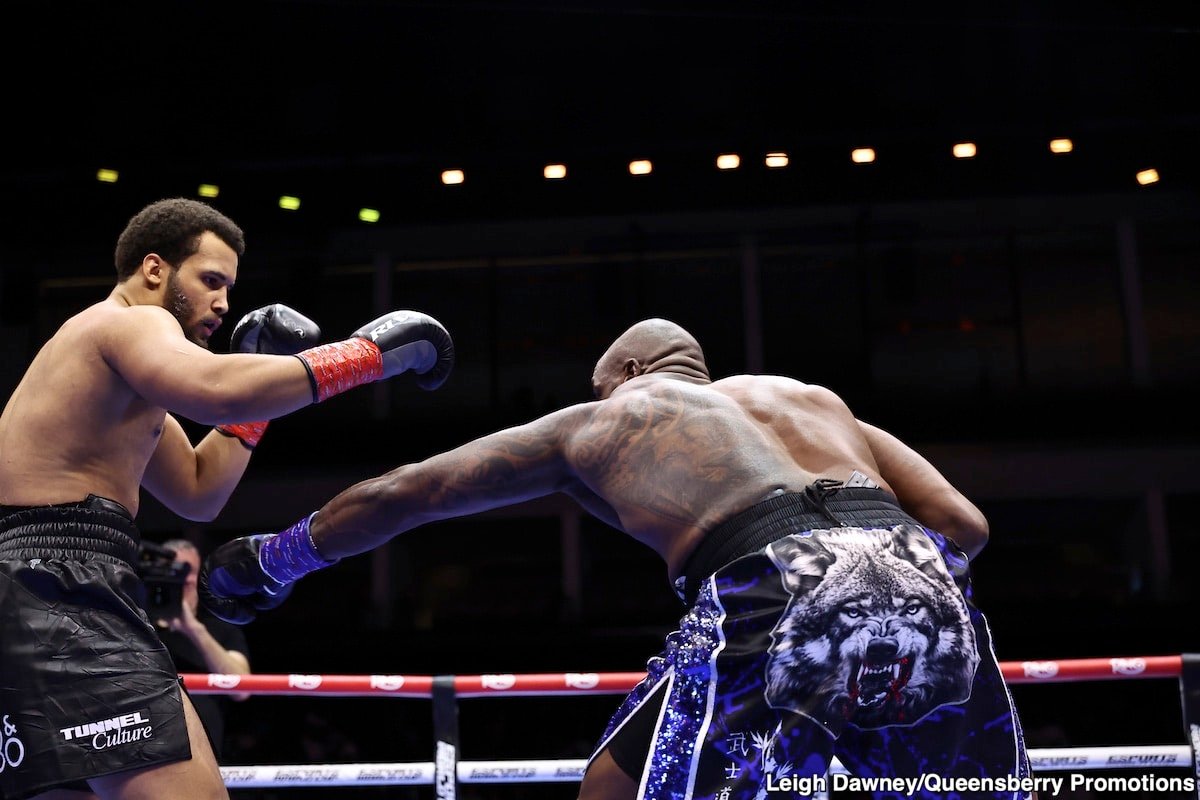


Itauma operates more like a heavyweight potshotter. He waits for an opening, fires a fast power shot, and resets at distance. When attacked, he often retreats in a straight line in a manner similar to Shakur Stevenson.
The young heavyweight does not regularly circle away, duck beneath punches or lean his head away from shots as Ali did. Their differences do not make Itauma an inferior prospect. They make him a completely different type of fighter.
Saunders based his comparison partly on what he has witnessed during visits to Ben Davison’s gym. Itauma works against three rotating sparring partners and reportedly retains enough energy to hurt them late in those sessions.
“I think he’s the best I’ve seen since Muhammad Ali. He has got that back foot, front foot. You’ve got that slip counter. He’s the only heavyweight I know who can lean off and throw a lead uppercut and finish you with two or three shots after in a split second. Balance, his feet, everything about him,” Saunders said on talkSPORT Boxing.
Ali had already produced far more evidence by Itauma’s age. He had won Olympic gold, defeated Archie Moore, survived difficult fights with Doug Jones and Henry Cooper, and taken the heavyweight championship from Sonny Liston.
That is not Itauma’s fault. His handlers cannot manufacture another Liston or Cooper, and modern heavyweights tend to develop more cautiously. The opposition he has faced still leaves unanswered questions about his stamina, chin and response when an opponent survives his early power.
Filip Hrgovic provides the first meaningful examination. Itauma may dominate him, as Saunders believes, but Hrgovic has the size and experience to make him work after an initial attack misses or his straight-line retreat becomes predictable.
Saunders later conceded that he still wants to see Itauma handle a fast 12-round professional fight in smaller gloves. Until that happens, comparing him to Ali is premature, especially when their styles are vastly different.

