

It takes a truly exceptional affordability crisis to put Bill Ackman and Zohran Mamdani on the same side of the barricade. Yet this month the billionaire hedge fund manager and New York’s democratic socialist mayor found common cause over an unlikely grievance: the cost of getting into the US Open.
Ackman took objection to the cost of a grounds pass listed for $363. Mamdani responded to the broader uproar by securing 1,000 tickets for New York residents at $100 apiece, prompting more than 336,000 people to apply for them. Somewhere between the two sits the uneasy economics of the modern US Open, where a $65 ticket with no guaranteed seat on any court can fetch more than five times that amount on the tournament’s resale marketplace.
For generations the US Open has traded on its reputation as the people’s slam. Take the 7 train to Queens, buy a grounds pass and spend the day milling about within a few feet of the world’s best tennis players. But as the final major of the season begins in earnest on Sunday, that democratic ideal has been confronted with a basic problem: more and more of the people are being priced out.
“The US Open is owned by the USTA which is a non-profit,” Ackman wrote on social media. “The idea that a day one ground pass is $363 is absurd. The USTA’s mission is to promote the sport of tennis. How is a $363 ground pass consistent with this mission?”
It was a striking complaint from someone who rarely has reason to balk at the price of admission – in more ways than one – and more striking still when Mamdani weighed in days later. The two men have spent much of the past year fighting from opposite sides of New York’s affordability debate, with Ackman sparing no expense to prevent Mamdani’s election last November. Apparently all it took to set aside months of political blood sport for a temporary detente was the obscene cost of getting into the tennis. Heartbreaking, indeed.
The simplest explanation for the US Open sticker shock is also the most obvious: demand has exploded. But so, too, has what the USTA is selling.
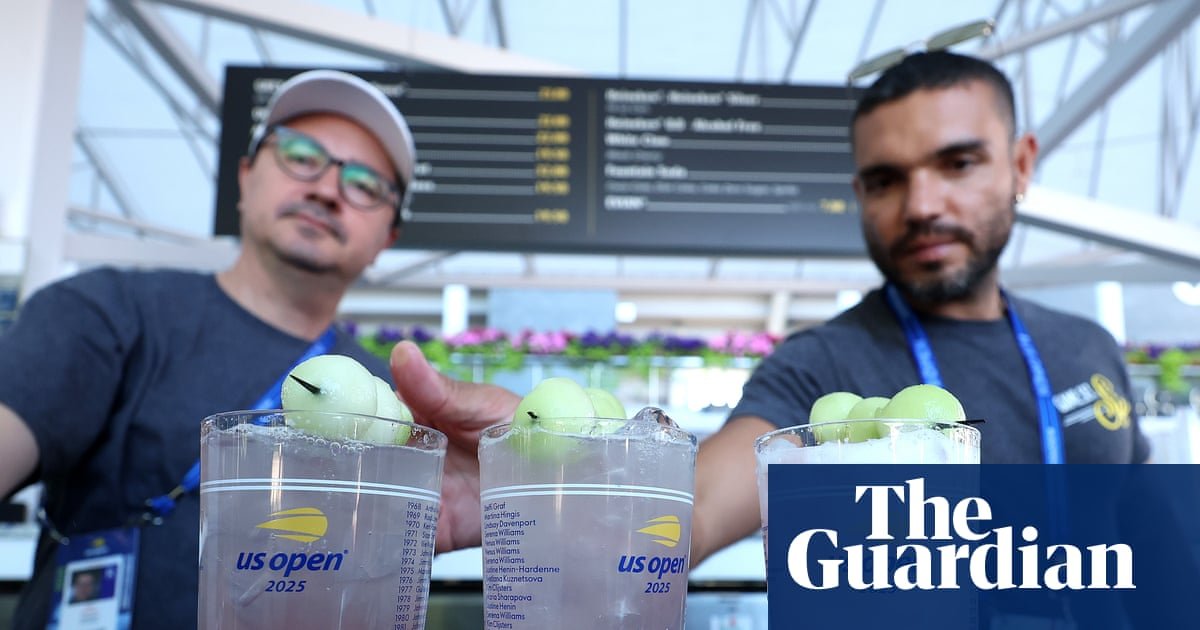
Over the past decade the Open has transformed itself into something closer to a three-week New York cultural festival, a late-summer collision of sport, fashion, celebrity and conspicuous consumption. The $23 Honey Deuce is no longer merely a cocktail but a souvenir, status marker and social media prop. Celebrities fill the suites, influencers populate sponsor boxes and Arthur Ashe Stadium can feel less like the main show court than an aperitif to fashion week. The Open surpassed one million visitors for the first time in 2024 and shows little sign of slipping back below that mark. Everybody wants in because everybody else wants in.
And there is little indication the Open intends to resist that momentum. Craig Tiley arrived this summer as the USTA’s new chief executive after more than two decades running Tennis Australia and the Australian Open, where he presided over that tournament’s similar evolution into a sprawling three-week sports and entertainment festival. He is already talking expansively about what the US Open could become.
Asked Saturday how the tournament may continue to grow, Tiley offered a striking shorthand for his vision. “This will become the tennis Disneyland,” he said, a phrase unlikely to reassure the sport’s traditionalists. Growth, he explained, would come not necessarily from making the event longer but from creating more experiences for players, children and adults within it.
Tiley described the “insatiable appetite” to come to Flushing Meadows as a “nice problem”, though he acknowledged there were limits to how far attendance itself should grow. “We’re not going to be one of those events that just want to pack the precinct for the sake of packing it,” he said.
Unfortunately, for many longtime attendees, the same demand powering the Open’s expansion is also reshaping the economics of getting inside.
As countless World Cup tourists came to discover the expensive way, New York law allows tickets to be resold for whatever someone is willing to pay, and Ticketmaster, the Open’s official ticketing partner, operates both sides of the transaction: selling the original ticket and hosting the marketplace where it can be resold.
The USTA benefits from both. It acknowledges receiving a portion of Ticketmaster’s fees when a verified resale ticket changes hands, meaning the same ticket can generate revenue for the organization more than once. The USTA says its share comes from fees rather than the resale price itself, but declined to answer questions from the Guardian about what percentage it receives or how much the arrangement generates annually.
The USTA argues that shutting down Ticketmaster resale would simply push buyers toward less secure third-party platforms. Tiley nevertheless acknowledges that prices on the secondary market can become prohibitive. “One of our biggest challenges is the secondary market,” he said. A grounds pass officially priced at $65 was listed for $321 on Saturday.
But the organization has declined to answer another basic question: how much face-value inventory is actually made available before tickets begin appearing on the secondary market. That question carries particular weight because the USTA is not the New York Yankees, Live Nation or another profit-maximizing entertainment business. It is a 501(c) nonprofit whose stated mission is to grow tennis, staging its showcase event on public land in Flushing Meadows-Corona Park.
Nor is the secondary market the only force pushing the Open upmarket. Arthur Ashe Stadium is midway through an $800m renovation that will leave its overall capacity largely unchanged while dramatically altering who sits where. About 3,500 moderately priced loge seats are disappearing while courtside capacity increases by roughly 2,000. In effect, thousands of mid-priced seats are becoming expensive ones. The old loge averaged $291 per session; non-club courtside seats replacing much of that inventory average more than $560, with hospitality seats running above $2,300.
The shift shows up in the USTA’s own finances. Television, historically one of the great engines of modern sports wealth, has largely stopped driving growth at the Open: broadcast revenue was $149.1m in 2021 and $145m in 2024. Over the same period, ticket revenue jumped 37%, from $151.7m to $208.5m, sponsorship rose 26% and hospitality and service revenue more than doubled, from $41m to $83.3m.
The growth opportunity, in other words, is increasingly not the viewer at home but the customer on the grounds – buying the ticket, upgrading the seat and paying $40 for a lobster roll or $100 for caviar-flecked chicken nuggets.
It has been an extraordinarily successful strategy. The USTA’s net assets have nearly doubled over the past decade, from $371m to $734m, with more than $580m now held in cash and investments. And that prosperity overwhelmingly depends on its showcase event: in recent years the Open has generated nearly nine out of every 10 dollars of USTA operating revenue, up from roughly 80% a decade ago.
There are important qualifications. The USTA reinvests substantial sums in grassroots tennis, facilities and player development, while the pandemic demonstrated the vulnerability of an organization so heavily dependent on a single annual event. Tiley has also pointed to the competing demands of increasing player prize money while preserving affordable access for families.
Nor is premiumization unique to tennis. Across American sports and entertainment, ordinary seats are routinely replaced with clubs, suites and hospitality areas because corporations and wealthy spectators will pay multiples of what the displaced customers could. The USTA points to Fan Week – when entry to the grounds, qualifying and practices are free – as evidence that accessibility remains central to the Open. Tiley noted Saturday that eight of the event’s 22 days offer free access and said a record number of children had visited during the preceding week. He believes Fan Week could eventually become the most heavily attended week of the entire event.
There is another argument in the USTA’s defense: if maximizing ticket revenue were the sole objective, it could simply price a grounds pass at $300 and capture the money now flowing to resellers. Instead, it continues to put $65 tickets on sale, even if managing to cop one is easier said than done. “We knew that we would be leaving dollars on the table,” its chief commercial officer, Kirsten Corio, recently told the Athletic. “The market has spoken and has demonstrated that we have.”
The USTA says its ticketing policies will be reassessed after the tournament and Tiley insists accessibility will remain part of the calculation even as the Open continues to grow. “There is an insatiable demand,” Tiley said Saturday. The challenge, he added, is matching it with “the balance of making sure kids have access”.
But as the self-styled people’s slam tries to reconcile its competing incentives, that balance is becoming increasingly difficult to strike.
