

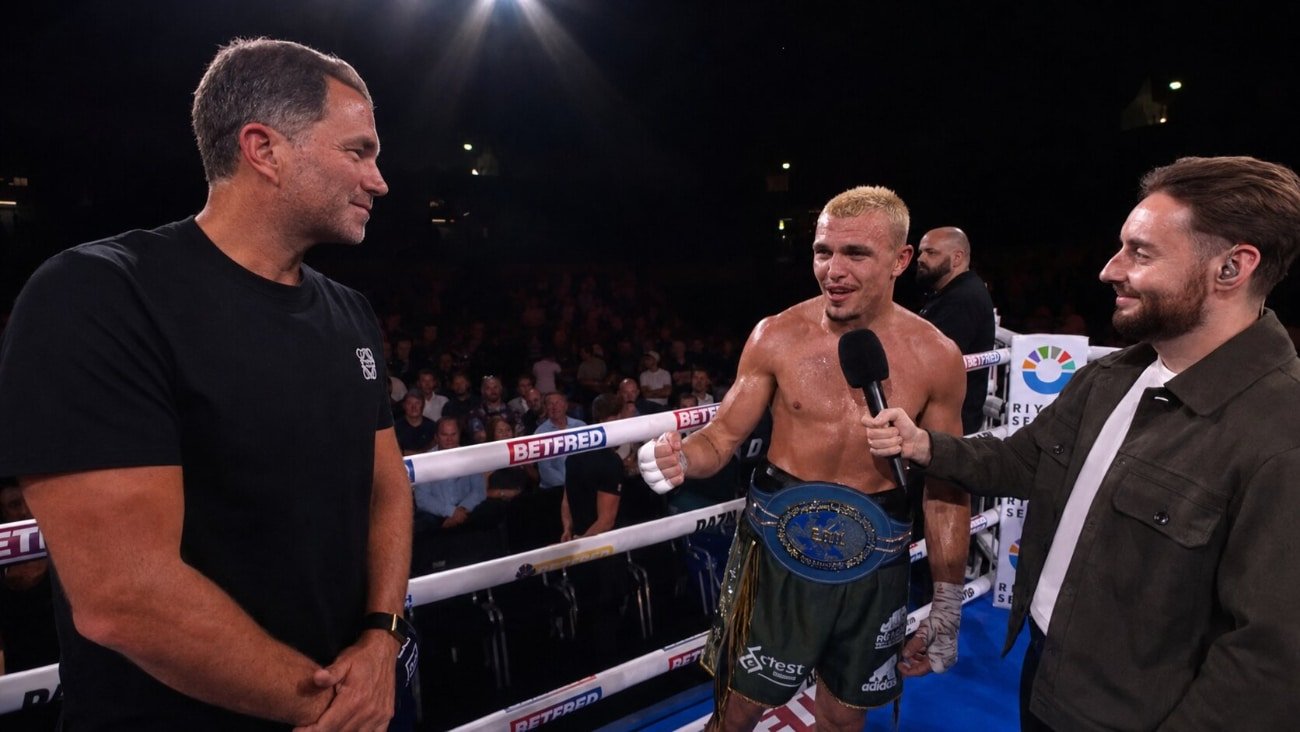


Both men traded freely during the opening two rounds. The Italian found some success in the second when the fight became untidy, swinging from wide angles and forcing Liddard to defend at close range. That type of contest offered him his best opportunity. Liddard adjusted in the third. He tightened his combinations, worked behind straighter punches, and began forcing Morello toward the ropes. The change allowed him to control the distance without surrendering his aggressive approach.
Still trying to answer, Morello found his punches becoming easier to read. Liddard increased the pace while making him work harder for fewer clean connections.
The physical damage became visible in the seventh when a cut opened over Morello’s right eye. Rather than rushing recklessly for the finish, Liddard targeted the injured area while maintaining control.
A punishing eighth round brought the knockdown and worsened the cut. The injury was examined, and Morello managed to complete the round, but his corner had seen enough and retired him before the ninth. The result gave Liddard a European title to accompany his British and IBF Intercontinental belts. He moved to 15-0 with nine knockouts, while Morello fell to 26-2 with four stoppage victories.
More important than the belt was the way Liddard handled a seasoned opponent who arrived determined to compete. He recognized when the early exchanges were becoming too reckless, changed his approach, and then closed off Morello’s route back into the fight.
Durability and willingness kept Morello involved for several rounds, but they could not overcome the difference in speed and punch selection. By the eighth, Liddard had complete command. Tougher middleweights await if Liddard advances through the world rankings. His performance showed that he can make corrections during a fight and remain aggressive without abandoning control.
