

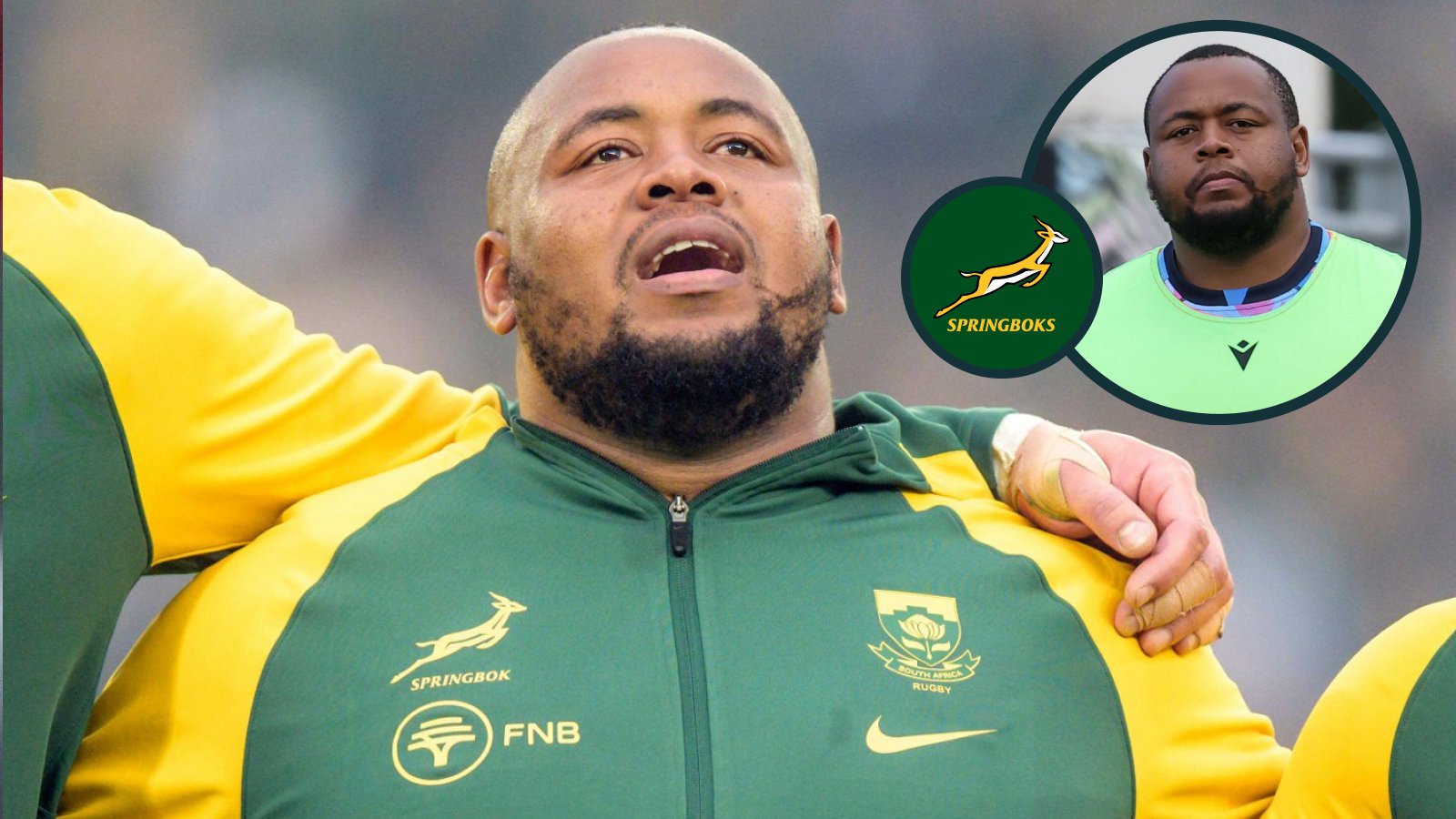

Former Lions team doctor Rob Collins, the man who allegedly approved Asenathi Ntlabakanye to use medication containing banned substances, reportedly refused to testify in the Springboks front-row’s doping trial.
In August 2025, Ntlabakanye was found to have returned an ‘adverse analytical finding’ following a drugs Test before he was formerly charged in September.
The hearing was held earlier this year and this month the independent panel decided to impose an 18-month suspension on the tighthead prop, starting from May 13, 2026.
Ruled out of the 2027 Rugby World Cup
The ban ends on November 13, 2027 which is the day of the final of next year’s Rugby World Cup in Australia which means Ntlabakanye will miss out on the Springboks’ campaign at the global showpiece.
According to a report by Afrikaans publication Rapport, Ntlabakanye’s defence team wanted to call Collins as a witness as they tried to strengthen the Lions and Springboks forward’s case, but he turned down that request on legal advice.
The South African Rugby Union (SARU) announced the news of Ntlabakanye’s positive test in August 2025 and at the time the governing body revealed that the drug was taken “with the permission and under the supervision of a medical doctor specifically appointed to deal with the medical matters of professional rugby players”.
“Ntlabakanye was transparent, acted in good faith and followed the correct prescribed medical processes at all times,” SARU’s statement read.
According to Ntlabakanye’s defence, he was referred to an endocrinologist for a condition that was preventing him from losing weight.
That endocrinologist subsequently prescribed the 27-year-old’s medication.
Ntlabakanye then showed the prescription to Collins, who he said gave him permission to use it.
However, two of the medications contained the two banned substances.
Springboks prop set to miss the Rugby World Cup after doping suspension handed down
According to global practice in the regulation of banned substances in sport, the onus always rests on the athlete to take responsibility for what he or she takes. That resulted in Ntlabakanye still receiving punishment.
A maximum suspension of four years
The maximum suspension which Ntlabakanye could have received for the substances in his system is four years.
However, the independent disciplinary panel that dealt with the matter would have taken the circumstances of his positive tests into account when deciding on his punishment.
The panel revealed its findings on May 13. The player, the South African Institute for Drug-Free Sport (SAIDS), World Rugby and the World Anti-Doping Agency (Wada) then have 21 days to appeal the punishment to the Court of Arbitration for Sport (CAS).
Want more from Planet Rugby? Add us as a preferred source on Google to your favourites list for world-class coverage you can trust.
According to Rapport‘s information, the Ntlabakanye camp will make a final decision next week on whether or not they will proceed with an appeal.
The Lions have already revealed that they will honour Ntlabakanye’s contract, which is valid until 2028, but the four-Test international will suffer a loss of income as he will not be earning any match fees from the Johannesburg-based outfit or the Springboks in the meantime.
Rapport asked Ntlabakanye’s legal representative, Barend Kellerman, whether they would sue Collins, to which he replied: “I cannot comment on that.”
While Collins opted not to testify, the Lions’ chief executive, Rudolf Straeuli, did come to Ntlabakanye’s defence at the hearing.
Rapport revealed that Straeuli and the Lions have given Ntlabakanye their unequivocal support from the beginning, and the former Bok coach testified on behalf of the prop.
READ MORE: Cheslin Kolbe on the verge of making sensational Stormers return – report
