

In the bitter aftermath of her straight-sets defeat by Elena Rybakina at the WTA Finals last November, an inconsolable Aryna Sabalenka walked over to her courtside player box and slumped into a chair. She had been completely overpowered by her opponent, a strange and unusual feeling for such a powerful player, and she was seething. Sabalenka eventually settled on a popular Russian idiom to explain Rybakina’s untouchable form, which she believed was fortunately timed: “Once a year, even a stick shoots,” she said.
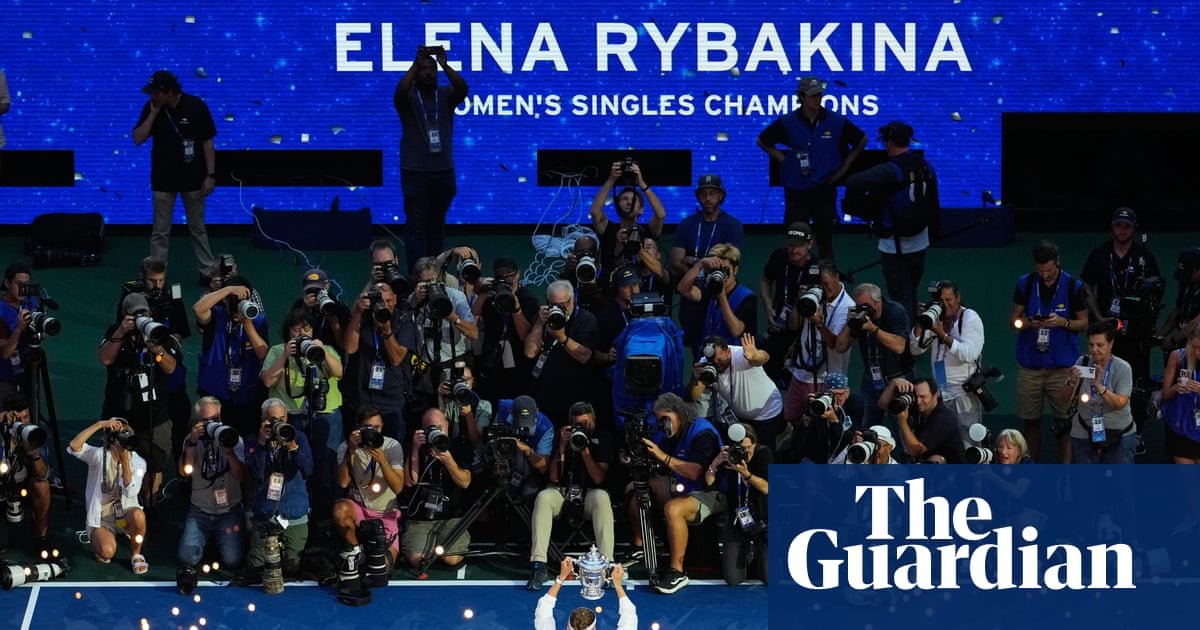
That stick, it turns out, has spent the past year shooting straight at Sabalenka in every significant match. Rybakina’s performance in Riyadh was a clear warning and she has dominated the hard‑court grand slam tournaments this year, beating Sabalenka in the Australian Open and US Open finals.
In the space of a year Rybakina has transformed her status among the elite, rising from a one-time grand slam title winner still wondering if she would properly follow up her early success, to becoming a three-time champion and world No 1. Suddenly, the 27‑year‑old is one French Open triumph away from winning the career grand slam, as close to completing her set as Iga Swiatek and Jannik Sinner.
She is more than capable of doing so. Although her big serve and less capable movement once led people to consider clay a potential weakness, Rybakina has proven herself an elite player on the surface, as everywhere else. Alongside her victory at the Rome WTA 1,000 tournament in 2023, she has won five titles on clay compared to eight on hard courts, a relatively large haul on the red dirt considering how many more hard-court tournaments are held throughout the season.
As Rybakina has continued to progress in the past week, however, there is one unresolved topic surrounding her. A key part of her development has been her recovery from the various health issues and injuries that plagued her in 2024 and 2025, leading to numerous withdrawals and retirements. Her relationship with her coach, Stefano Vukov, was a significant theme during this difficult period.
Last year, Vukov was banned from coaching at WTA tournaments after the WTA concluded from an investigation that he had engaged in abusive conduct towards Rybakina. Rybakina was critical of the WTA from the start of his provisional suspension in January 2025 until the ban was overturned upon appeal the following August, allowing him to rejoin her team on-site at events. After defeating Sabalenka in the WTA Finals, Rybakina refused to pose for a photo with the now former WTA chief executive Portia Archer.
During the best season of her career, Rybakina has repeatedly made vague references to that situation, describing the restoration of her team as a key reason behind her success. “I think that now I have a very good team around me, good people,” she said on Thursday.
“It definitely helps. It’s been a lot going on in the previous year outside of the court. I think now all my focus was on tennis. I can’t always perform at my best, there are always ups and downs, but I think we’ve been doing a very good job, right decision in certain situations, because every day is a challenge.”
after newsletter promotion
Alongside the allegations of abusive behaviour, for a long time Vukov’s public on-court coaching interactions with Rybakina were widely criticised and a source of discomfort for many viewers, pundits and former players. He was often negative, critical and relentless in his nitpicking of her faults throughout matches. Since returning from the brief ban, it appears that he has opted for a different approach in their matches. He seems more likely to encourage her and offer sound tactical advice. A charitable reading of their interactions would be that he may have taken the widespread criticism of his conduct into account and adapted his behaviour. Others might understandably conclude he is now simply more aware of the microphones in his box.
Either way, the silence from Rybakina’s team since the overturning of Vukov’s ban makes this situation even more difficult to judge. On Friday, no fewer than three members of Sabalenka’s team – Anton Dubrov, Max Mirnyi and Jason Stacy – eagerly held a press conference to preview the women’s final. Vukov is surely now the heavy favourite to win the WTA award for coach of the year, but as usual Rybakina’s team did not communicate either before or after the final. On the evidence of her imperious performance against Sabalenka, the stick will continue to shoot and its aim is only improving, but there remain unanswered questions surrounding the new leader of women’s tennis.
