

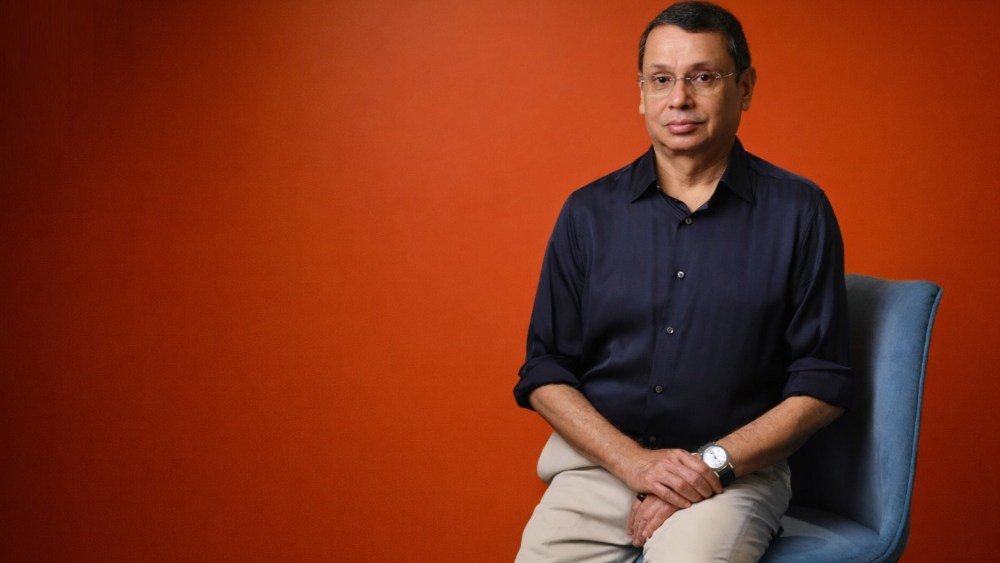
“Cricket is at a crossroads,” says Uday Shankar.
As vice-chair of JioStar – the behemoth Indian platform that serves more than 500 million viewers, spends some $3.9 billion a year on content, and was built, in no small part, on the back of cricket rights – he is not speaking as a neutral observer. The 2022 Indian Premier League (IPL) cricket tournament auction saw rights value soar to $6.2 billion, a per-match valuation of $15 million second globally only to the NFL. The boards played competitive dynamics brilliantly to get there. The problem, says Shankar, is that the buyer universe has since shrunk dramatically, and the ones still competing are doing the math. “Why should you really expect JioStar to pay the same value for a match between India and Afghanistan, India and Bangladesh, or India and Sri Lanka that I pay for a match between India and England or India and Australia?” he says. The answer, as far as he is concerned, is that they shouldn’t – and until cricket’s administrators globally reckon with that, the sport risks pricing itself out of the primary market that funds it.
“JioStar is the goose that lays golden eggs,” he says. “Now they have to decide whether they want to kill the goose or keep [it] laying eggs.” He describes an active internal inquiry at JioStar into how much further the company can commit to the sport. The Future Tours Program, cricket’s scheduling framework, draws particular impatience. It almost looks, he says, like it was designed when the East India Company was still running the world.
He is not predicting a walkout. He is issuing a warning with a specific commercial logic. “There are sensible people in cricket administration,” he allows. “But the entire group of administrators globally needs to come together, because India – and within India, one or two media companies – are so fundamental to the future of cricket.”
The market appears to be catching up with his argument. With the current rights cycle expiring in 2027 and a new auction expected ahead of the 2028 season, analysts at Media Partners Asia are already projecting the next cycle will hold flat at around $5.4 billion – matching the current deal in headline value at current exchange rates compared to 2022 but representing a 13% decline on a per-match basis, as the expanded match schedule dilutes individual game value. With the merger of Viacom18 and Disney’s Indian operations having removed the primary source of competitive tension from the previous auction, the dynamics that drove the 2022 price surge are unlikely to repeat.
The person saying this is not a media executive who stumbled into cricket. He is, at root, a journalist – one who built a career on going to places others wouldn’t, asking questions others hadn’t thought to ask, and watching an India that most of his industry preferred to keep at arm’s length.
He was a student at Delhi’s Jawaharlal Nehru University in the early 1980s, left-leaning, campus-active, convinced he could change the country through politics. Then something clicked. “I realized just in time that you don’t change anything in politics,” he tells Variety. “Politics changes you.” He became a journalist instead, deliberately choosing to go to Patna in the thick of Bihar’s upheaval – the Mandal Commission fallout, caste wars, extreme left-wing unrest – while his peers chased postings at the Economic Times and the Times of India in Mumbai and Delhi.
The television obsession came from a single moment. In 1991, he caught Gulf War coverage at a friend’s place on CNN – access that required, in those days, an enormous satellite dish and a good deal of luck. In a country where literacy was limited and newspaper penetration was thin, he understood immediately that television was going to be the most powerful instrument India had ever seen for reaching people. He walked out of his job at the Centre for Science and Environment, where he had been part of the team that launched the environment publication “Down to Earth” and had edited a citizens’ report on the state of India’s environment, and set out to make it in TV.
Several years of struggle followed. He freelanced – small news packages, current affairs shows, executive producer credits on programs anchored by Karan Thapar. He went for job interviews at news channels, most of which no longer exist. At one, the woman interviewing him delivered her verdict at the end of the session: he did not have in him what it took to succeed in television, and her advice was to go back to print. “I came back disheartened,” he says. “But I think that’s the kind of thing that just reinforced my determination.”
The break came when Aroon Purie decided to launch news channel Aaj Tak and took a chance on Shankar despite his limited live news background. “The credit goes to Aroon Purie,” says Shankar. “It worked brilliantly for me.”
Then came the Murdochs’ Star India. By the time he arrived, the network was successful but plateauing – strong in Hindi-language entertainment, catering almost exclusively to the urban middle class. He had one early conversation with Rupert and James Murdoch that confirmed his instincts. He asked them why, when everyone else was looking across Asia, they had decided to double down on India. Rupert’s answer: “The power of a billion people and a democracy. How wrong could you go?” Shankar saw the same thing. His response was a blitz of regional expansion – in the Bengali, Marathi, Malayalam, Kannada, Telugu languages – that rewired the logic of Indian television. He launched a Kabaddi League at a time when virtually no one believed in it; a friend told him he had become too arrogant, that nobody would watch. Some 450–500 million people now watch the sport.
“The aspiration to get a better life for themselves and their next generation was universal,” he says. “It wasn’t just limited to the middle class.”
Outside cricket, Bodhi Tree – the investment platform he co-founded with James Murdoch in 2022, backed in part by Qatar’s sovereign wealth fund – has put significant capital into media and education, the latter through Allen Career Institute, a company that prepares roughly 400,000 students a year for India’s ruthlessly competitive engineering and medical entrance examinations. “People from small villages of Bihar and Uttar Pradesh and Madhya Pradesh who went to a school where the physics teacher didn’t know any physics, the maths teacher didn’t know any maths – these people were able to qualify for medicine and engineering because of support from businesses like Allen,” he says. Bodhi Tree’s thesis is to digitize that access and extend it further.
A conversation with Shankar about Bollywood turns sharp. The success of “Dhurandhar” – the spy thriller produced by Jio Studios that has become one of Bollywood’s biggest recent hits – draws from Shankar a pointed diagnosis of what ails the industry. He credits the film’s success not to any systemic improvement in Bollywood but to the fact that it was made by people outside the usual circle. The same talent insularity that has held Hindi-language cinema back has, by contrast, been avoided by cricket. “Cricket, for all its problems, has done one brilliant thing: it has opened the talent gate far and wide,” says Shankar. He invokes pacer Akash Deep, who grew up in a village in southern Bihar without a road, let alone a cricket field, yet ended up playing for India. Until Bollywood reaches beyond its familiar bubble of writers, directors and actors, Shankar argues, it will keep losing the audience to Tamil, Telugu and Kannada industries that already have. “The viewers of cinema have moved far ahead of the makers of cinema,” he says. “That is the big crisis.”
On distribution, he offers a sharp data point: active connected TV sets in India now outnumber pay TV households. The transition has arrived. He does not lose sleep over it because, as he sees it, the mode of delivery matters far less than the quality of the IP. What does matter is the part of the stack nobody has touched: monetization. Streaming runs on the same two-legged model – advertising and subscription – that newspapers invented more than a century ago. “Media companies have done a great job of innovation in content,” he says. “But innovation in monetization model has remained absent completely.” AI enters the picture not as a threat to creative work but as a tool for producing content at lower unit cost and generating the data that could unlock new revenue streams.
He rejects the label “media company” entirely for what JioStar has become. Technology and creativity, he insists, are the only honest description. And yet the man making that argument spent his formative years filing from drought-hit villages and floodplains – and by his own account has never stopped thinking like a reporter. “The value that I add is I ask the questions,” he says. “People spend too much time trying to provide the answers and not enough time asking the right questions. At heart, I’ve remained a journalist.”
It was, after all, the trade that saved him from politics.
