

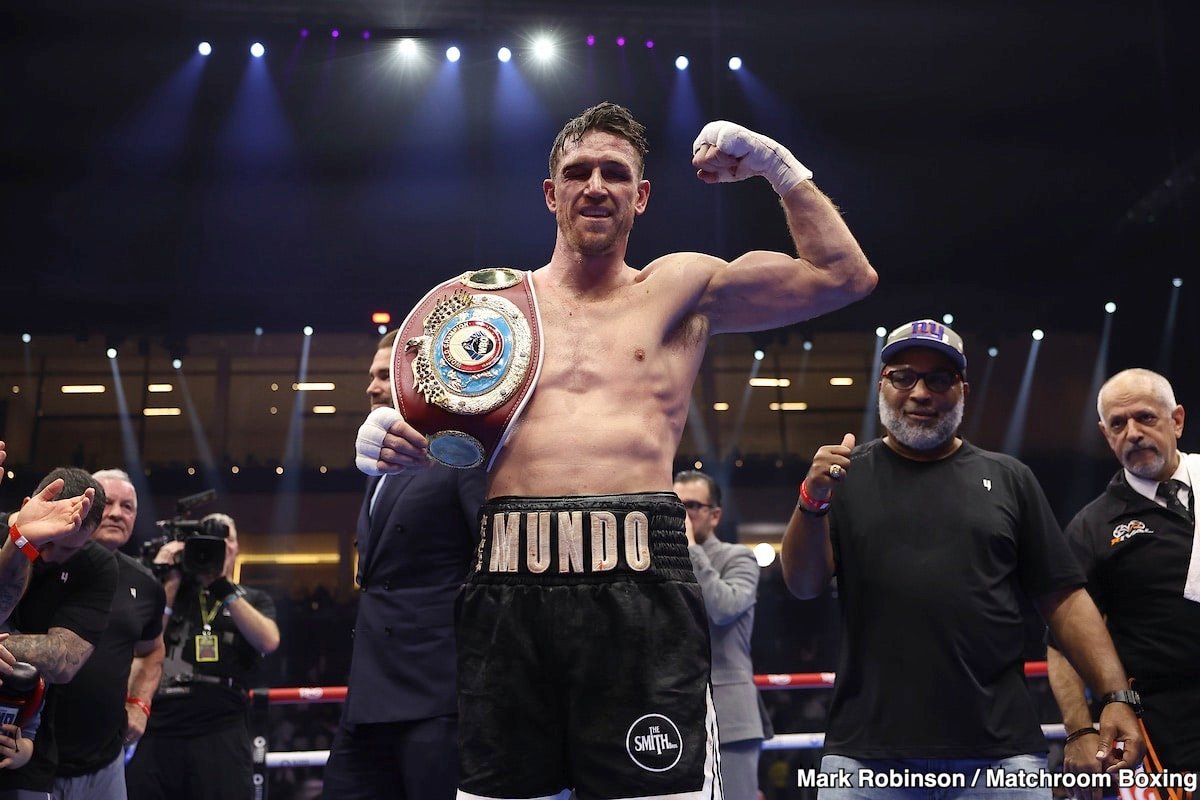


The deal gives Smith the opportunity he has pursued through the WBO mandatory system. It also gives trainer Buddy McGirt time to construct a strategy around the weaknesses Artur Beterbiev exposed during his two fights with Bivol.
Although Bivol is a superb technical boxer, he is not untouchable. Beterbiev showed that he becomes less comfortable when an opponent keeps advancing, attacks after his combinations, and denies him the space needed to restore his rhythm.
McGirt will have studied those sequences closely. Finding the weakness is one thing. Getting Smith to exploit it for 12 rounds is another.
Smith Cannot Wait for One Left Hook
Smith has the height, reach, and power to make Bivol work harder than usual at long range. He needs to use those advantages instead of surrendering the center and waiting for a counter left hook.
That habit has hurt him against elite opposition. Once driven backward, he tends to settle behind a static high guard near the ropes. Bivol is too accurate and disciplined to waste those opportunities. He can split the guard with straight punches, hook around it and move away before receiving a meaningful response.
Light taps can also manipulate Smith’s lead hand before Bivol sends the jab through the center. If Smith remains upright behind his earmuff guard, the right uppercut creates another opening between his gloves. Merely absorbing those punches while waiting to counter would allow Bivol to accumulate points without taking comparable risks.
McGirt may instruct Smith to meet Bivol’s entries with the jab and straight right rather than waiting for him to finish punching. Continued pressure after the first retreat is equally important. Beterbiev succeeded because he refused to let Bivol escape the exchange and immediately restore his preferred distance.
Advancing alone will not be enough. Smith needs to step across Bivol’s escape route instead of following him around the ring. Opponents who pursue Bivol in straight lines allow him to change direction, land a check hook and leave behind a rapid combination. Feints are also needed to draw a defensive reaction before Smith commits the right hand or left hook. Otherwise, those punches become too easy to read.
Persistent heat disrupts Bivol’s rhythm and forces him to spend more energy moving than punching. He wants opponents to pause after his combinations, giving him time to bounce back into position.
Can Smith Maintain the Plan?
The difficulty is that Beterbiev’s pressure comes naturally. Smith is not accustomed to sustaining the same physical and mental intensity against top opposition. He may follow McGirt’s instructions during the opening rounds, then return to covering up and searching for one counter once Bivol begins beating him to the punch.
An 18-month absence adds another concern. Smith has not fought since defeating Joshua Buatsi in February 2025. Intercepting Bivol requires precise timing, making such a long layoff poor preparation for a boxer whose chance depends on catching an opponent during brief entries and exits.
Since undergoing his elbow procedure, Bivol has returned to outpoint Michael Eifert. He should enter with less uncertainty about his timing and physical condition.
Whatever weakness McGirt has identified, the decisive question concerns Smith’s execution. He must resist his defensive habits, hold his ground, and maintain the strategy after Bivol begins controlling the exchanges.
