

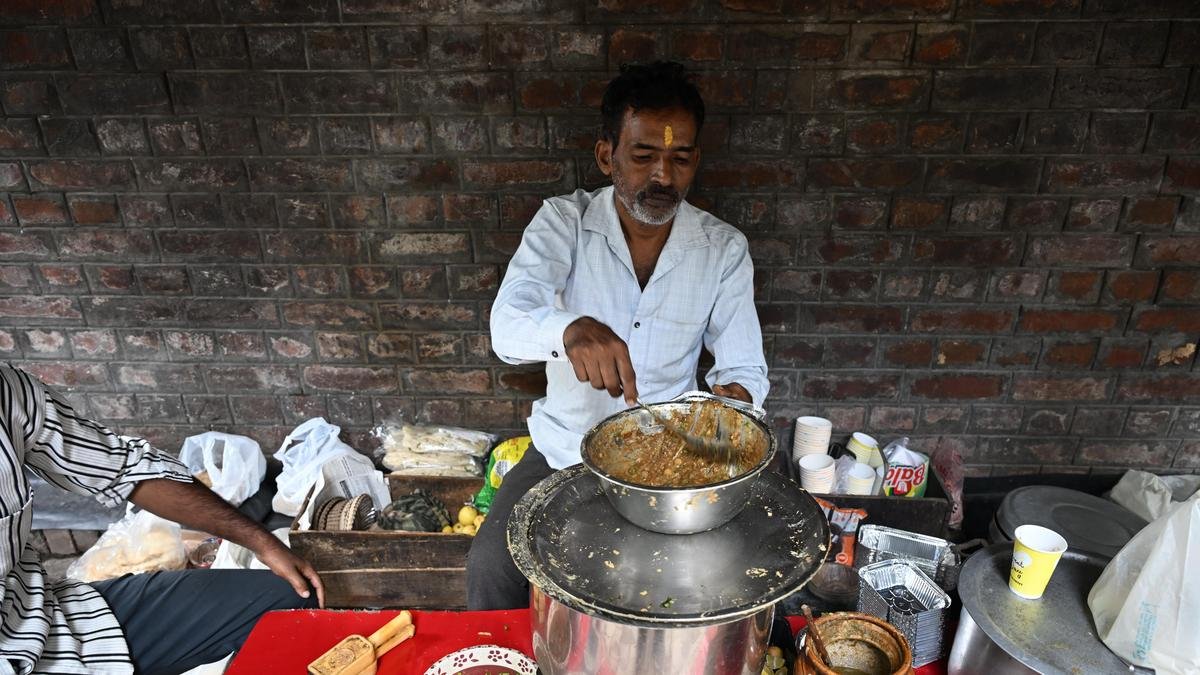
When I think about covering domestic cricket, I don’t just remember the matches. I remember the places, the food, the people and the lifelong friendships that came with them.
One of the great joys of covering domestic cricket (Ranji Trophy, Duleep Trophy, Irani Cup) is that, unlike a T20 or even an ODI, you have time. Time to watch a match properly, but also time to discover the culture of the place you are visiting. You begin with the cricket, and before long, the city becomes part of the story.
Punjab is a state known for its rich food and great hospitality, as is Madhya Pradesh. But personally, Gujarat, and Rajkot in particular, was probably the most vibrant state I visited for domestic cricket. The crowds were passionate in their own way, and the food in Baroda, Surat, and Valsad was unforgettable. Rajkot, I still believe, offers one of the best thalis in India. I made two or three trips there and, if you are a foodie, there is simply so much on offer.
In my early days, domestic cricket also gave me something that became increasingly valuable: time with players. You got to know their food habits, where they liked to eat and which places they recommended. In the evening, they would say, “Come, let’s go here,” and you would tag along with four or five players and discover the city with them.
Perhaps nowhere did that become more vivid for me than Delhi.
Growing up there, my friend, the reputed TV and radio broadcaster Ghaus Mohammad, and I did not always have tickets to watch Ranji Trophy matches. So our challenge was figuring out how to hoodwink the man at the gate, a gentleman called Pathak, and get into the stadium. We had different entry points marked out to sneak in.
On one occasion, the security was so tight that we thought there was no way in. Fortunately, Ghaus knew the scoreboard operator, who quietly called us in and led us into the ground.
Those were great days.
Delhi’s cricketing culture was intertwined with its food. Around the Ferozeshah Kotla, the Railway Stadium, the University ground, Khalsa College and Modern School, there were places that became part of our routine.
The Lala Raghubir tournament at Modern School was an enormously popular tournament played in the peak of summer. Behind the school’s boundary wall was a man named Jaipal who sold matar kulcha. At the end of the day, players would send somebody to get plates of it. Jaipal continues to operate from the same spot even today.

At Nathu’s in Bengali Market, Raman Lamba, Manoj Prabhakar and other cricketers would unwind over plate after plate of chole bhature.
| Photo Credit:
SUSHIL KUMAR VERMA

At Nathu’s in Bengali Market, Raman Lamba, Manoj Prabhakar and other cricketers would unwind over plate after plate of chole bhature.
| Photo Credit:
SUSHIL KUMAR VERMA
On occasions when Sonnet Club was playing at Modern School, players such as Raman Lamba, Manoj Prabhakar, K Bhaskar Pillai, Ajay Sharma and Atul Wassan would walk to nearby Bengali Market, barely five minutes away. At Nathu’s, the famous chole bhature would arrive, and these cricketers, despite playing big cricket, would eat plate after plate.
Lamba loved chole bhature. So did Prabhakar. After the meal, they would inevitably find themselves signing autographs as crowds gathered around them. It was fun because the sessions were full of unforgettable anecdotes from their matches.
The Goswami Ganesh Dutt Tournament was a great attraction because of its venues, colleges in the North Campus. The players looked forward to some great food from nearby eateries, and the best was the poori-sabzi. “We used to bring it from Bille Di Hatti in nearby Kamla Nagar,” recalled Amit Bhandari. Among those who loved the poori-sabzi and sometimes chole bhature was Virender Sehwag.
I have always felt that if you want to know the best places to eat in a city, ask a sportsperson. The sports fraternity has an amazing knowledge of where to find the best food outlets in the city. They have friends who guide them and fans who take them around.
Do you know who knows the best chicken tikka joints in the metro cities? John Wright, the affable New Zealand cricketer and coach.
Even now, I keep discovering places through cricketers. I recently learnt about a little-known chole bhature shop in Pahadganj, opposite the New Delhi Railway Station, from someone who recommended former Uttar Pradesh cricketer Rizwan Shamshad as the man to ask. Rizwan has promised to take me there on his next visit to Delhi this cricket season.
Mohammad Kaif, meanwhile, would take you to Old Delhi and get VIP treatment at places such as Al-Jawahar and Karim’s near Jama Masjid. I have been there with Kaif and his father, Mohd Tarif. You know what? They don’t order. The food arrives and just keeps arriving.
Then there were the tea stalls near the Railway Stadium: Salim Tea Stall and Sportsman Tea Stall. Players frequented them, and, unbelievably by today’s standards, former Railway team selectors would even pick Railway teams there.
Outside the Railway Stadium was Rishi Dhaba, just a few minutes away. Every cricketer who represented Railways and stayed at the stadium dormitories during their camps knew it. Its dal was outstanding. I have had dinner outings at the Rishi Dhaba with players such as Kartik Murali, Sanjay Bangar, Abhay Sharma, Yere Goud, Kulamani Parida, JP Yadav and Harvinder Singh. They were big fans of the dhaba.
These places were about more than food. They were about the banter. During a match, lunch was limited because players were batting or bowling. Dinner was when they relaxed.
There was another ‘eatery’ I remember vividly: a tiny food stall near Feroze Shah Kotla, not even a proper kiosk. At Kotla No. 2, a gentleman called Jain had a tea stall. He had earlier operated outside Ambedkar Stadium and was given a small mound inside the ground where he could sell chai. Later, he started making chole bhature and Bun-samosa, but the players became particularly fond of his bread omelette.
I have seen international stars loving the snacks that Jain saab offered. Ranji Trophy teams practising at Kotla preferred his food to the DDCA canteen. I have had his bread omelettes with Madan Lal, Yashpal Sharma, Lamba, Mohinder Amarnath and Surender Khanna among his celebrity clients.
Even during Ranji matches, breakfast would come from Jain saab. He was so popular that DDCA eventually gave him a kiosk. He was constantly busy and even kept accounts for players who could not pay. Sometimes he would simply tell a player, “Come, have a bread omelette. I won’t charge you. Come.”
That generosity is part of what made those memories special.
Then there was Frontier Samosa Wala on Panchkuian Road, about five minutes from the Railway Stadium. The owner had come to Delhi after Partition and set up the stall. His samosas were enormous and, in my view, the best in the city. They came with aloo sabzi, followed by hot gulab jamuns.
I remember Yashpal Sharma, Ashok Malhotra, and Madan Lal going there during a Ranji Trophy match. Malhotra was perhaps the greatest foodie among the cricketers. He could eat samosas at breakfast. On all three days of the match, we went to the Frontier. Because the owner knew the players, he would serve us out of turn. Yashpal and Ashok could polish off three or four large samosas apiece, and still find room for gulab jamun.
Many visiting umpires and match referees would remember the poori-sabzi from Chaina Ram’s shop, owned by domestic stalwart Hari Gidwani. And many of us, domestic cricket reporters, would look forward to veteran DDCA official Parmod Jain treating us to peanuts and gajak (a crunchy, dry, sweet) during the winter at the Kotla.
How can I forget Saravana Bhavan?
I would go there with Kartik and Bangar. Kartik was so well known there that I almost thought he owned the place. Two waiters seemed to be serving us exclusively. The service was extraordinary. I was stunned. Kartik also knew his way around Khan Market and, like Bangar, could always tell you where to eat in whichever city you were visiting.
Once, Ranjib Biswal, when he was a selector along with Venkatapathy Raju, took me from Kotla to Andhra Bhawan for lunch. “Outstanding food,” Biswal kept raving throughout the drive. Only after we reached our destination did Raju politely inform Biswal of my connection with Andhra Bhawan, and Biswal laughed loudly. I had lived at Andhra Bhawan for the first 32 years of my life.
That was Delhi. The cricket grounds were never just cricket grounds. They had their own ecosystem: the tea stalls, the dhabas, the food vendors, the restaurants, the dormitories and the people who seemed to know every player by name.
The same intimacy existed around hockey.
During preparations for the 1982 Asian Games and the 1984 Los Angeles Olympics, the Indian hockey team trained at the National Stadium, and I covered many stories of the team as it had some gruelling practice sessions.
There was no mineral water then. Water came in a bucket with two mugs, and the players drank from the same bucket. Their minor refreshment was bananas.
After sessions, many of us would walk to a kiosk near Children’s Park. Its bread omelette was famous. The vendor also served kulcha and tikki, and whatever else was available. We would sit on the pavement by the road.
Zafar Iqbal, Mohd Shahid, MM Somaya, Romeo James, Mervyn Fernandis, Joachim Carvalho and a whole lot of Indian hockey players would gather there. Nobody knew the vendor’s real name, so he became “Ganja” because he was bald.
The players would say, “Ganje ka breakfast khana hai, bhaiya. Chalo.” There was chai afterwards.
I did not go only for the food. I went because the players gathered there, and those conversations allowed me to build friendships over time. Carvalho, Syed Jalal-ud-Din Rizvi and Fernandis were among those I got to know.
Even today, those players remember “Ganje ka breakfast”. His name, I learnt recently from Ajay Jadeja, was Bharat. “We loved eating whatever he served,” remembered Jadeja, who was also fond of the “bread pakodas” served at the Canteen in National Stadium, where he trained under Gurcharan Singh.
Looking back, I wonder how much of that culture survives.
There was another part of that culture that I remember with particular affection: the people who opened their doors to cricketers.

Madras Hotel was a second home for cricketers from Chennai. I remember its idli-sambar, dosa and thali, and the many players who found warmth there.
| Photo Credit:
Rajesh Rao (son of Mr. Rao)
Madras Hotel was a second home for cricketers from Chennai. I remember its idli-sambar, dosa and thali, and the many players who found warmth there.
| Photo Credit:
Rajesh Rao (son of Mr. Rao)
A generous cricket lover was Mr Priyavadan Rao, who owned the Madras Cricket Club in Delhi. Sehwag played there, as did Venkat Sundaram and many other cricketers.
He ran the iconic Madras Hotel in P Block of Connaught Place, which became a home of sorts for players coming from Chennai, or Madras as it was then. There were rooms on the top floor that he offered to players at nominal rates, and sometimes free food and breakfast.
For people like us, including local cricketers, it was almost embarrassing because he would not take money.

Mr Priyavadan Rao gave cricketers a home away from home at Madras Hotel. I remember his generosity, and the warmth he extended to players.
| Photo Credit:
Rajesh Rao (son of Mr. Rao)
Mr Priyavadan Rao gave cricketers a home away from home at Madras Hotel. I remember his generosity, and the warmth he extended to players.
| Photo Credit:
Rajesh Rao (son of Mr. Rao)
Madras Hotel, established in 1935, shut down in 2005, but I still remember it for its idli sambar, dosa and thali, and for the domestic cricketers who loved going there.
When I think about domestic cricket now, that is what comes back to me.
The matches are part of the memory, but so are the roads, railway tracks, stadium corners, tea stalls, dhabas, samosa shops, bread omelettes, thalis and long conversations.
International cricket has become increasingly restricted. The IPL can feel like hit-and-go: write the preview, watch the match, write the report and leave.
Ranji Trophy still gives us something different.
It gives us time.
And perhaps that is why, after all these years, I remember not only who played and what happened, but where we went afterwards, what we ate, who sat beside us and what we talked about.
Published on Sep 25, 2026
