

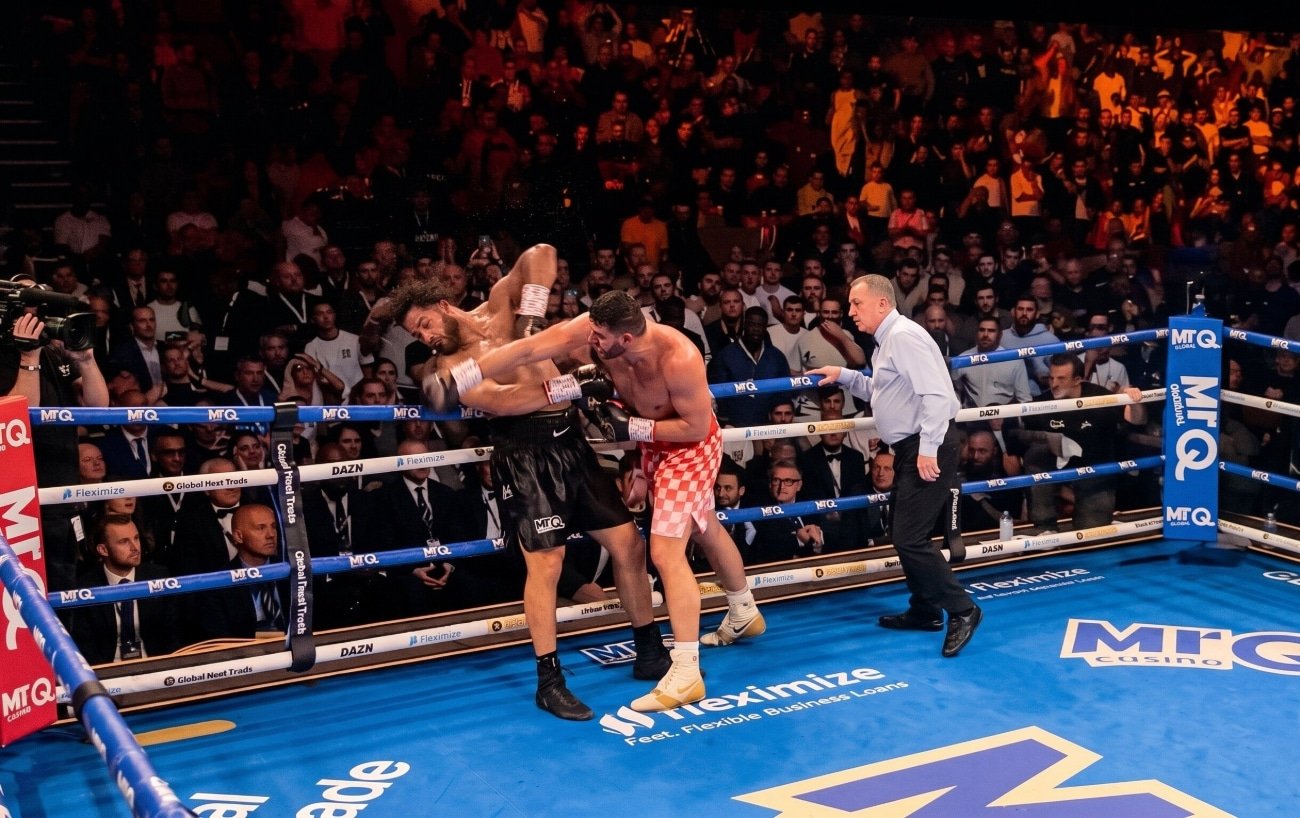


“He’s going to be fine with his stamina. He’s just going to slow down. He’s not going to overload on those shots when he almost had him out in the eighth.”
Slowing down comes at a price. Throwing fewer combinations gives Hrgovic more time to set his feet and apply pressure. Itauma would need better defense and movement to compensate. The aggression that helped him win exchanges also exhausted him. He cannot assume he will retain control while doing less.
Calling it exhaustion also gives too little weight to the punches Hrgovic landed. Fatigue left Itauma exposed, but Hrgovic still had to exploit those openings. Recovering after a hard shot, protecting yourself while hurt, and judging when to answer are skills too. Mora credited those qualities while still treating Itauma as the more talented man. That judgment puts considerable weight on explosive offense and too little on the craft that survived it.
The matchmaking argument was harder to reconcile. Mora explained how quick knockouts leave fighters without the experience needed to manage fatigue, defend, and survive difficult rounds. Then he insisted Itauma had been matched perfectly. If those essentials remained untested before a world title fight, what made the preparation perfect?
Mora called the defeat very damaging and said Itauma was not ready for championship boxing. He understands the size of the failure.
Itauma needs to protect himself after throwing punches and stop chasing a knockout every time he hurts someone. Facing opponents who can take his power would help him learn, but there is no guarantee those fights would last. More quick knockouts would leave the same questions unanswered.
He lacks any proof that simply dialing back his aggression will patch the holes Hrgovic revealed. While Mora no longer claims the young heavyweight is ready for the elite level, his boundless optimism about what follows feels entirely unearned after such a decisive loss.

