

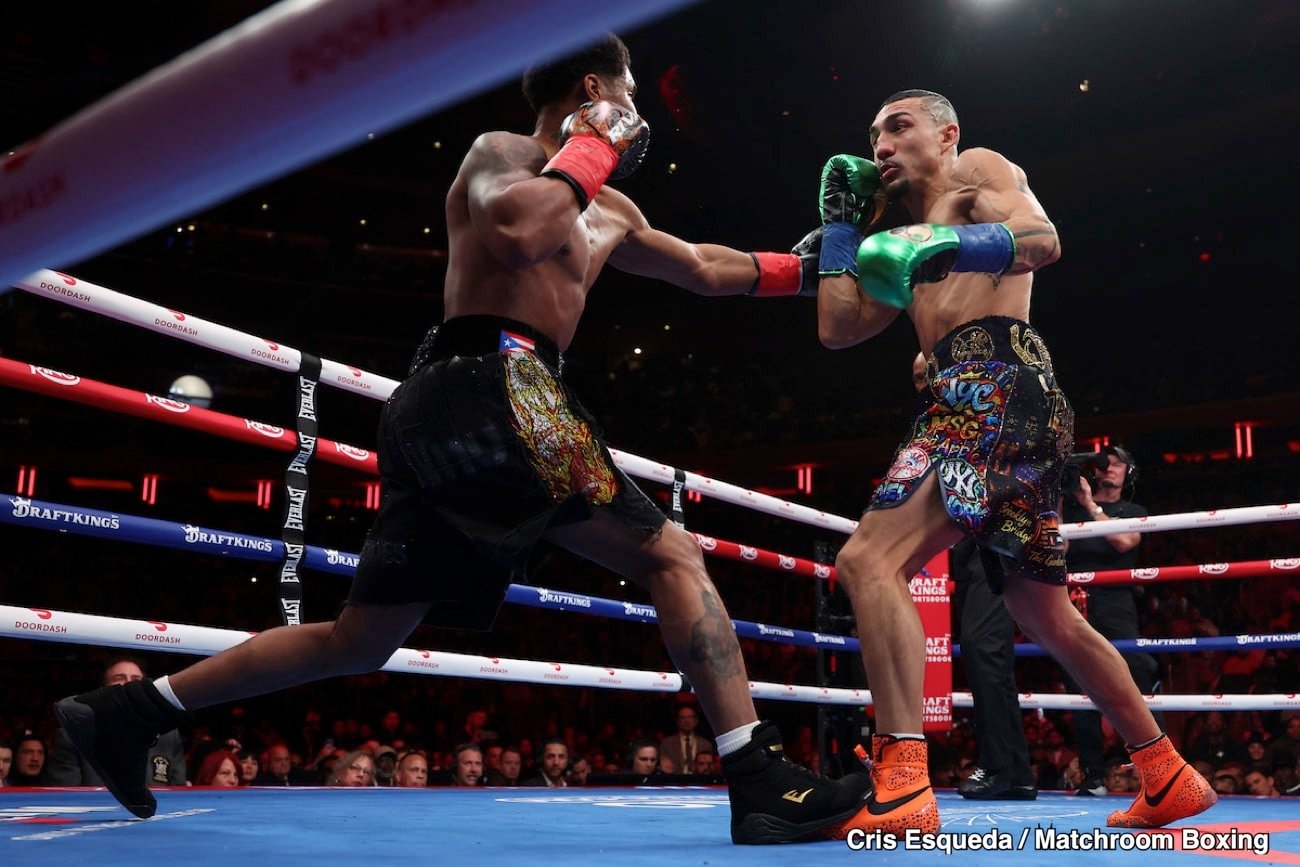


“You got to accept it wasn’t me, not this time,” Lopez told his father while discussing the Shakur fight on the Mr. Verzace podcast.
Lopez complained that rather than receiving useful instructions, he heard questions such as, “Where’s your power?” Senior responded by telling him, “You didn’t box in that fight,” before realizing where the conversation was going.
“I’m not even going to argue with you, because you’re blaming me for it,” Senior said.
There is enough blame available for both of them, but the actual boxing problem was much simpler.
Teofimo repeatedly came forward from too far away, frequently without establishing his jab, and loaded up on desperate single power shots. Shakur could see the attacks developing, pick him off with the jab or right hand, move away, and make Lopez begin the entire process again.
It became rinse and repeat. Teofimo also fought as if he had cement shoes when he needed to cut off the ring. Getting close to Shakur is difficult enough. Following him around rather than closing his escape routes made the job almost impossible. When Teofimo finally gained ground, he frequently surrendered it and allowed Shakur to return to his preferred distance.
The blueprint wasn’t hidden.
Cuba’s Robeisy Ramírez had shown one version of it when he defeated Shakur in the 2016 Olympic final. Ramírez pursued him when he tried to move away, pushed the pace and attacked with combinations rather than waiting around for one perfect shot. His activity and pressure were particularly important in the decisive third round.
William Zepeda later provided Team Lopez with a professional example. He narrowed the ring, forced Shakur toward the ropes and stayed on top of him. Instead of throwing one punch and resetting, Zepeda unloaded combinations to the head and body. Shakur spent long stretches fighting from the ropes and countering because Zepeda wouldn’t simply give him the room back.
That was the type of strategy Lopez and his father should have studied and drilled in camp.
Teofimo needed to use his jab to get inside, cut off Shakur’s exits and then throw four, six or more punches once he had him trapped. When Shakur shelled up to protect his head, Lopez needed to switch downstairs and keep working rather than backing away.
The combinations were critical. One big punch gave Shakur one attack to read, defend, and counter before escaping. A sustained combination would have forced him to remain defensive and created opportunities to attack somewhere else.
Senior asking, “Where’s your power?” was almost the worst message possible for a fighter already hunting for a one-punch bailout.
He shouldn’t have needed his father to invent a strategy from the corner anyway. Ramírez and Zepeda had already supplied plenty of tape showing Team Lopez what had troubled Shakur. The responses should have been rehearsed before fight night rather than Lopez trying to figure everything out while being jabbed and countered. Lopez now talks about realizing he cannot do everything himself.
“In my head, I pretty much could. I kind of feel like I have. But along the journey when you’re trying to make sure your team is good, that’s when things can get rocky,” he said.
What any of that has to do with attacking Shakur the same ineffective way round after round remains difficult to determine. Lopez and his father are conducting an elaborate postmortem involving psychology, team unity and outside interference. They would be better served studying the fights that had already shown them what needed to be done.
The troubling part is not simply that Lopez failed to make those adjustments against Shakur. It’s that he still sounds uncertain about what went wrong.

