

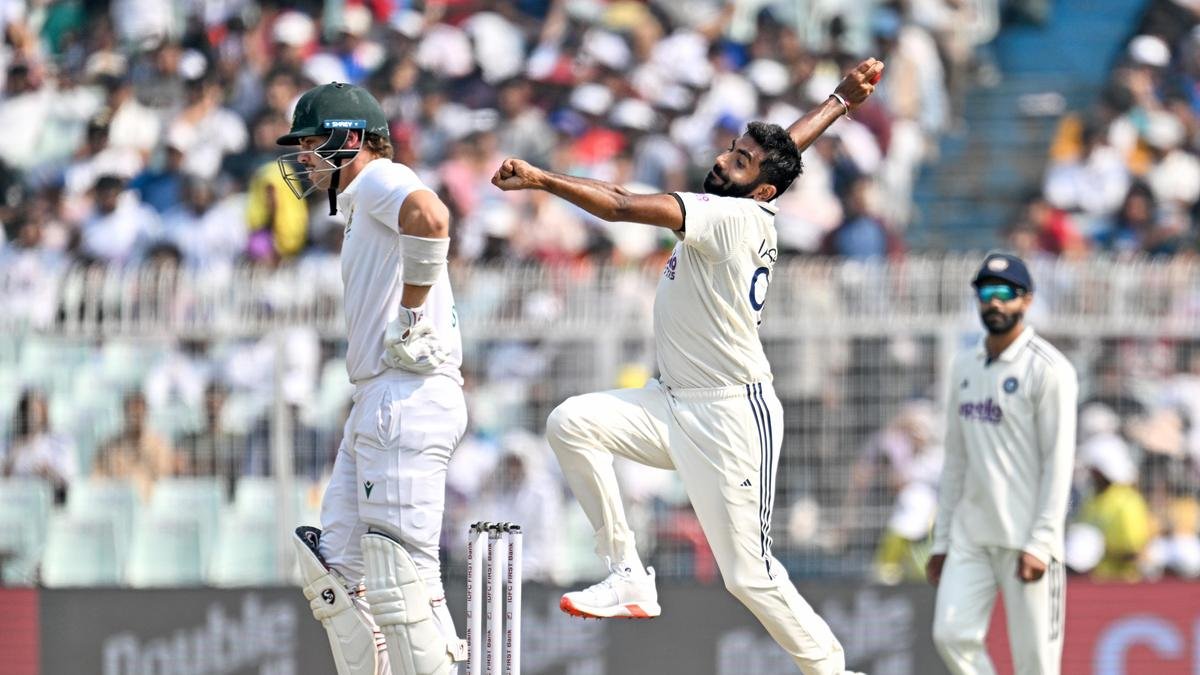
Jasprit Bumrah absence from India’s Test tour to Sri Lanka, due to a recurring knee injury, has once again turned the spotlight on the fragile fitness issues plaguing Indian fast bowlers.
Injuries, particularly to fast bowlers, are an occupational hazard and no high-performance system can promise a player will never break down.
The BCCI’s Centre of Excellence was set up to handle such challenges. The facility on the outskirts of Bengaluru houses the country’s top physiotherapists, strength and conditioning coaches and medical experts. But the state-of-the art facility has been without a head of sports science since Nitin Patel left in March 2025.
Earlier this year, the BCCI secretary Devajit Saikia had told Sportstar that the Board was set to appoint the seasoned Andrew Leipus as the head of sports science, but the Australian opted out after initially agreeing to take up the job, citing ‘personal reasons’. However, he was associated with Punjab Kings during IPL 2026.
Bumrah, India’s pace spearhead, sustained an impact injury to his left knee while fielding during the second ODI against England in Cardiff, which subsequently developed into reactive swelling severe enough to rule him out of the series-deciding match at Lord’s and now the Sri Lanka series.
Harshit Rana and Nitish Kumar Reddy, too, have struggled recently with injuries. People familiar with the rehabilitation process say Harshit returned before reaching his target weight because the team management was keen to have him available. The fast bowler was ruled out of the entire ODI series against England in July, after suffering a Grade 1 biceps femoris muscle strain (hamstring injury) during the third T20I against England.
This happened shortly after had he returned from a four-month layoff after a right knee surgery. Similarly, Reddy has had recurrent injuries as he tries to establish himself as a fast-bowling all-rounder. Reddy, who has been in and out of the facility since 2024, has been training with England’s Stefan Jones, as he looks to increase his speed as a fast bowler.
In June 2024, a hernia meant Reddy missed out India’s tours of Zimbabwe and Sri Lanka, while later that year, he headed to the CoE due to a side strain and missed out on the limited overs home series against England.
He injured his knee in England in July-August last year, while training in the gym. He missed out on the last two Tests and headed back to the CoE for rehab. Anshul Kamboj was flown in as his replacement, and went on to make his debut in the fourth Test in Manchester.
In October, Reddy suffered neck spasms and quadriceps injury during the second ODI against Australia in Adelaide.
ALSO READ: Bumrah ruled out of Sri Lanka Tests: 3 pacers in line to replace him
Now again, a similar quadriceps injury has brought him back to the CoE as he missed the tours of Ireland, England and won’t be ready for Sri Lanka either.
Sources indicate that the BCCI might assess the medical and rehabilitation processes at the CoE during an assessment meeting in Mumbai later this month.
To lay every injury at the CoE’s doorstep would be unfair. Fast bowling places extraordinary stress on the body, and even the most sophisticated systems in Australia, England or South Africa have seen world-class quicks such as Pat Cummins, Josh Hazlewood, Jofra Archer and Mark Wood endure long spells on the sidelines. As one senior coach put it, “Sports science can reduce risk, but it cannot eliminate it.”
However, what makes Bumrah’s case different is his value to Indian cricket. He is the leader of the attack across formats, and every time he is unavailable, the team’s plans must be redrawn. Bumrah’s latest setback may well have been unavoidable. But until India’s premier fast bowler can stay on the field consistently, the questions surrounding the fragile fitness system aren’t going away.
Published on Aug 02, 2026
