

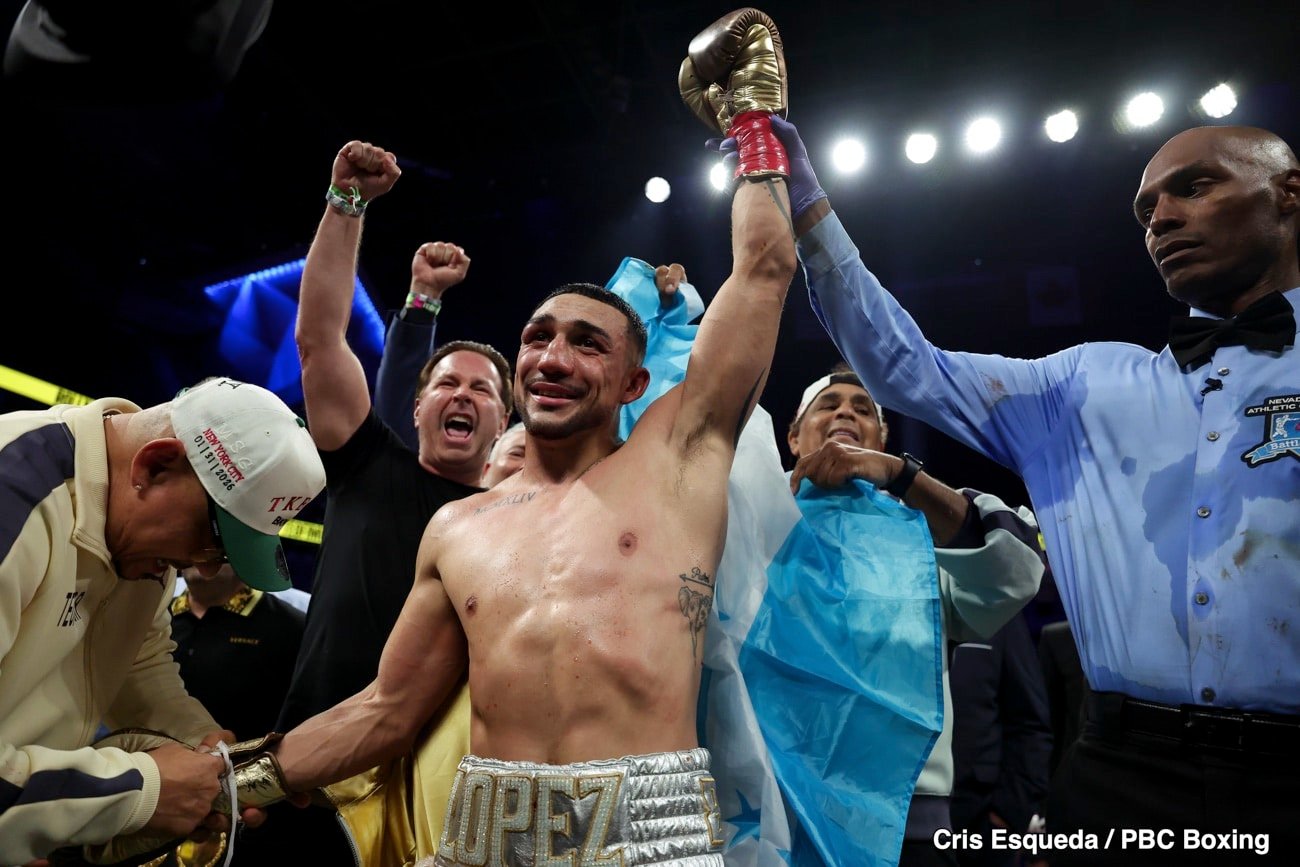


Instead, preferential treatment gave Lopez immediate access to one of the weakest champions at that weight. He collected another belt without first defeating an established contender. Had he been required to earn his place against one of the better fighters at 147, his attempt to become a three-division champion likely would have ended before the Romero fight.
Matthew Aguilar identified the larger pattern after watching Lopez’s decline across the weight classes.
“Teofimo Lopez was a very good, exciting, hard-punching lightweight. With every rise in weight, he’s become less and less of those things.”
Aguilar argued that boxing’s fixation on paper titles and manufactured history encourages fighters to move through divisions, where making weight is easier and additional championships are celebrated regardless of declining performance. In his view, the process leaves formerly hungry fighters less ambitious and less effective.
The physical change is only part of the damage. Modern stars can earn life-changing money from one major event. Once that happens, they often become ultra-selective. Staying active loses its importance because every return must bring another enormous purse, championship or famous opponent.
Ordinary bouts become unnecessary risks. The boxer waits six months, one year or longer for a lucrative opening to arrive. During that absence, timing fades, conditioning slips and the skills that created his earning power begin to deteriorate.
Past champions also moved through divisions, but most still needed to compete regularly to earn a living. Today, one or two major purses can provide enough financial independence for a boxer to reject anything that pays less. The sanctioning bodies encourage this behavior by granting recognizable names favorable rankings and rapid title access.
Adrien Broner demonstrated where the process can lead. His collection of championships increased his fame, but heavier divisions and diminishing activity gradually removed the speed, output, and sharpness that made him dangerous at the lower weights.
Terence Crawford reached a different endpoint. After earning his greatest purse against Canelo Alvarez, he retired while claiming there was nobody left to face and nothing more to accomplish. Opponents remained available. What disappeared was another event capable of matching the money and historical attention generated by Canelo.
Lopez now possesses a grander historical label than he did at lightweight, but he is no longer the explosive fighter who stopped Richard Commey. His third championship records the division he entered, not the fighter he has become.
That is modern boxing’s multi-division illusion. The belts continue accumulating while activity, ambition and proficiency disappear.
