

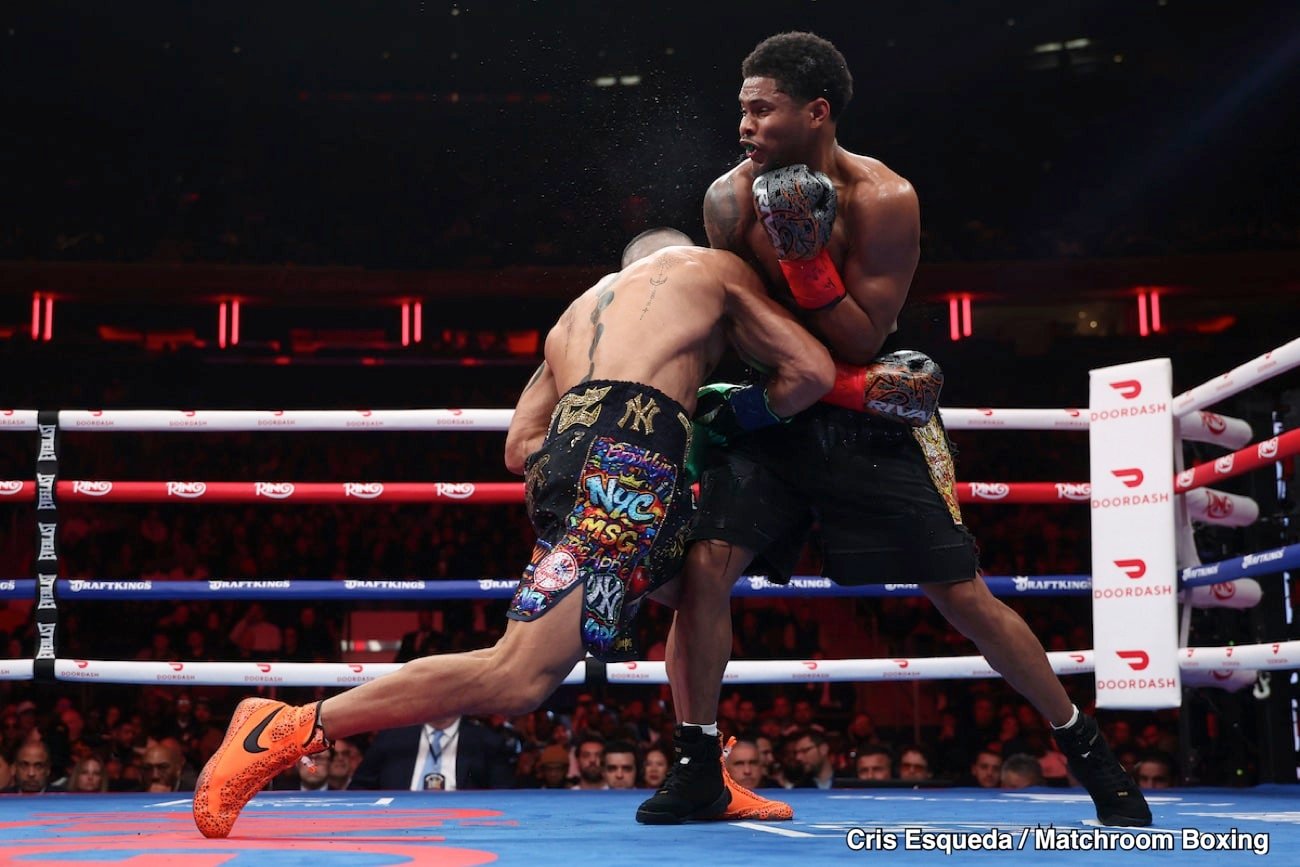


“For what? What has he done?” Toney said. “If you want to be top dog, fight the best fighters out there. Don’t make excuses. I did. Roy did. Marvin Hagler did. Who does he have to fight? The likes of Devin Haney, Gervonta ‘Tank’ Davis.”
Shakur is correct that he must create his own legacy. The difficulty is that his accomplishments are judged against fighters such as Toney whenever he receives a lofty pound-for-pound ranking.
Toney fought Michael Nunn, Mike McCallum, Roy Jones Jr., Vassiliy Jirov, Evander Holyfield, John Ruiz, and Samuel Peter. He climbed from middleweight to heavyweight without requesting catchweight protection against naturally larger men.
A fighter with that mentality would find plenty of work today. Toney did not need social media campaigns, prolonged negotiations, or weight concessions to convince people that he wanted dangerous opposition. Promoters knew he would accept the fight and rely on his ability.
That is the point Shakur sidestepped. He has captured titles in four divisions and defeated Teofimo Lopez, but he has pursued fights with Devin Haney, Ryan Garcia, and Conor Benn using weight stipulations. The proposed terms included catchweights for Haney and Garcia, along with a rehydration clause for Benn. That weakens any comparison with champions such as Toney, who moved up and accepted the full physical disadvantage.
The times have changed. Toney’s standard has not. If Shakur wants recognition alongside champions from earlier decades, he must beat Devin Haney, Gervonta Davis, and other elite opponents under normal championship conditions.

