

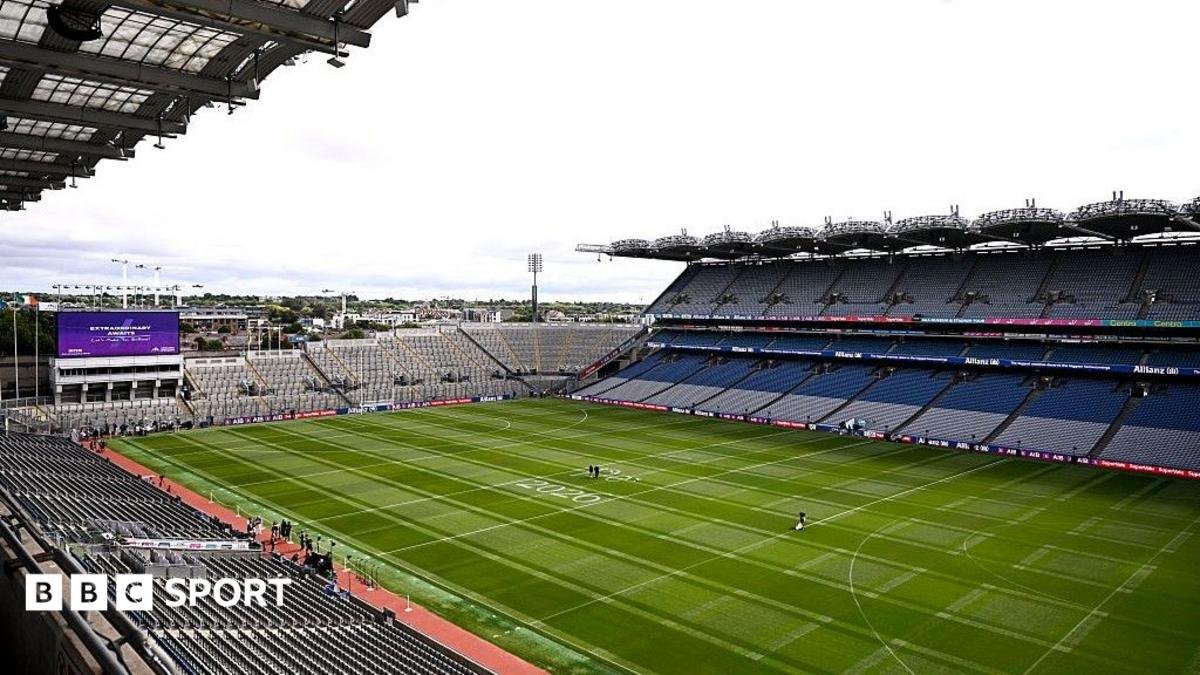
Historically, Croke Park was viewed as a symbolism of Irish nationalism.
Not only did the Gaelic Athletic Association’s Rule 42 prevent ‘foreign’ sports – in reality, the ‘English’ football and rugby – being played in the stadium, but until 1971 anyone who watched or played them could not be a GAA member.
The stadium itself was the scene of a brutal reprisal attack in November 1920, when 14 people, including the Tipperary player Michael Hogan, were killed by British forces, and many more were injured.
Earlier in the day, Irish Republican Army leader Michael Collins had planned an attack in the south of Dublin that led to the deaths of 14 people, including 12 men considered by Collins to be the backbone of the British intelligence system in the city.
The situation regarding GAA-only sport changed around the time reconstruction work at Lansdowne Road – where the Irish soccer and rugby teams played – began in 2007.
Amid huge debate, the GAA amended Rule 42 to allow Croke Park to be used for association football and rugby on a temporary basis. Then, in 2010, when Aviva Stadium was opened on the Lansdowne Road site, the policy of allowing use of Croke Park for other games on a case-by-case basis was made permanent.
“Games like rugby and soccer were seen as being imperialistic or not part of our native culture,” explains Peter McKenna, Croke Park’s stadium and commercial director, in a chat with BBC Sport.
“In order to maintain membership, there was the so-called ban. Things change over time, people become more mature and more flexible. So that rule no longer exists, and we have a very strong relationship with the Football Association of Ireland and with the Irish Rugby Football Union.”
