

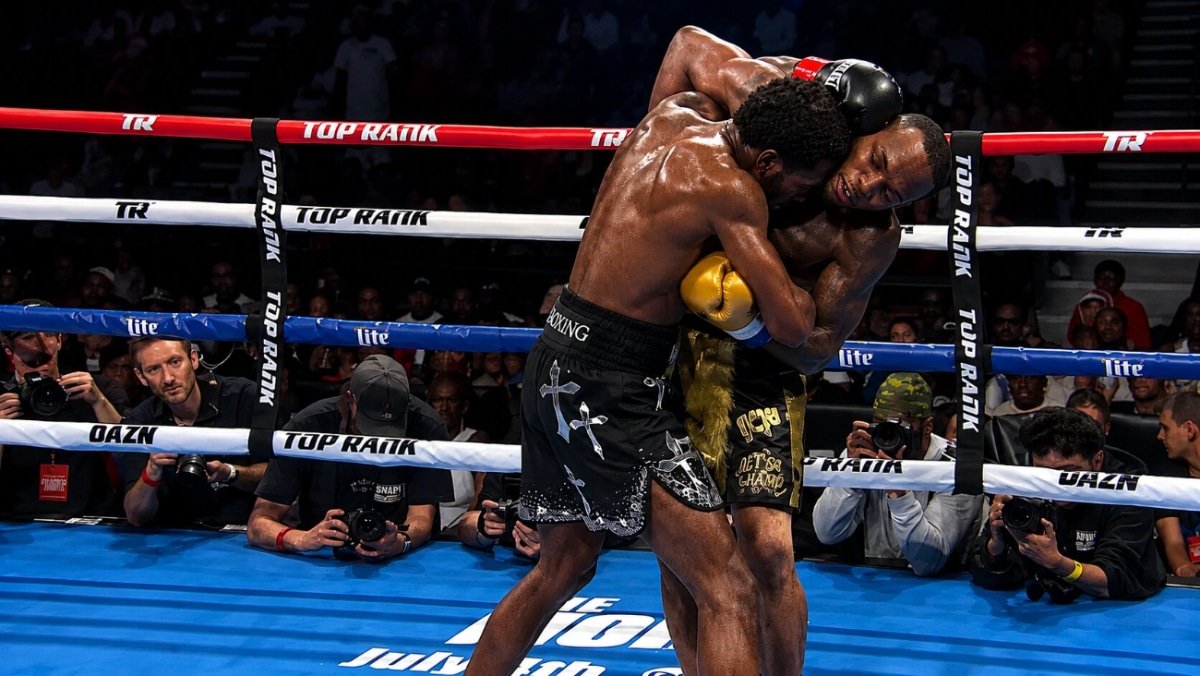


“I don’t think you truly believed,” Bradley said on his channel. “I don’t think you truly believed that Devin Haney was gonna pull that damn card.”
The former two-division champion felt Davis had the ability to beat Haney, which made his decision harder for Bradley to understand.
“You had a chance to knock him off, bro. And the crazy part is that when I was studying this fight, I’m like, ‘Damn, Keyshawn Davis could knock off Devin Haney. He got what it takes.’ Oh yeah. But you didn’t believe that.”
Davis’ financial demands also became part of Bradley’s argument about how much confidence Keyshawn had in winning.
“When a fighter says, ‘Oh, the money, the money, the money,’ a lot of times they want to get paid because they believe they going to lose,” Bradley said. “Anybody will get into the ring to lose if the money’s right.”
A $3 million offer was already available before the fight went to a WBO purse bid, Bradley said. Top Rank later won the bid at $8.55 million, leaving Davis with approximately $2.14 million under the mandated 75-25 split.
Accepting the bout, in Bradley’s view, gave Keyshawn a chance to change his financial position by defeating one of boxing’s biggest names. Instead, Davis walked away from the mandatory challenge after pushing for the fight publicly.
From Bradley’s perspective, betting on himself at the lower figure offered a much greater reward if Davis was as confident in beating Haney as his earlier callouts suggested.

