

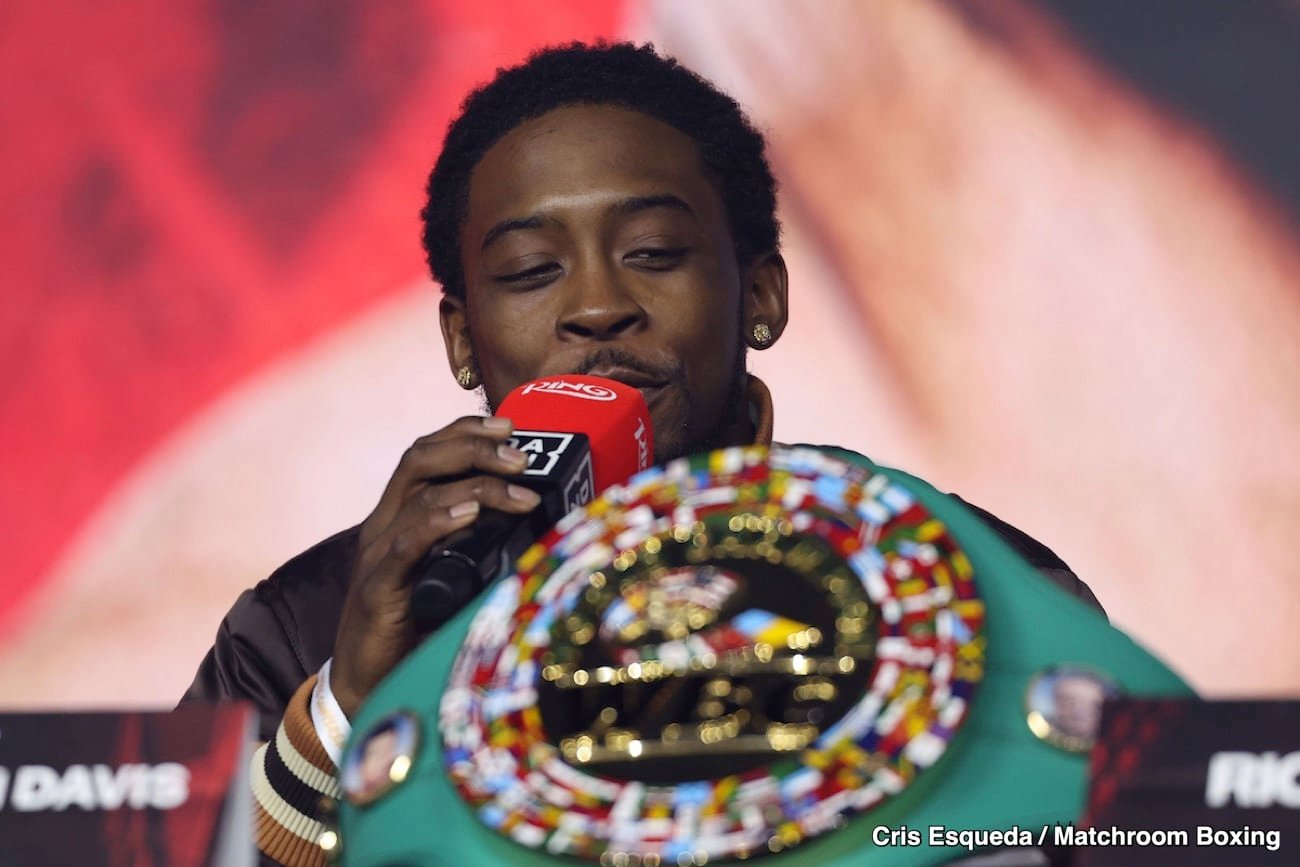


The financial expectations between the two sides were miles apart.
Coppinger also reported that Davis sought $5 million net after management fees to face Haney. That figure represented a dramatic increase from the biggest purse of his career, which previously stood at $1 million.
Those numbers help explain why Top Rank allowed the negotiations to collapse instead of matching Davis’ demands. A fighter coming off a career-high purse generally strengthens his negotiating position with major wins or championship leverage. Davis held the mandatory position, but Haney owned the world title, the stronger purse history, and greater commercial appeal.
From Haney’s perspective, there was little incentive to stretch beyond the economics of the fight. Champions rarely pay well above market value for mandatory challengers, particularly when other lucrative options exist if the mandatory obligation disappears.
The collapse also creates fresh opportunities elsewhere. Shakur Stevenson has already renewed his interest in facing Haney, and Zuffa Boxing would almost certainly welcome one of the biggest fights available involving its newest star. The problem with Shakur is he’s already requesting a 144 lb catchweight handicap from Haney.
If the WBO officially removes Davis from the mandatory position, Haney’s schedule suddenly becomes far more flexible.
If the reported figures are accurate, Davis’ camp counted on Haney’s side eventually meeting its asking price. Instead, the negotiation unraveled, leaving Davis without the $3 million offer, the $2.13 million purse bid payday, or a shot at Haney’s WBO welterweight title.
