


LAS VEGAS – The fractures have healed. The disdain has transformed to respect. The lawsuits have been dismissed.
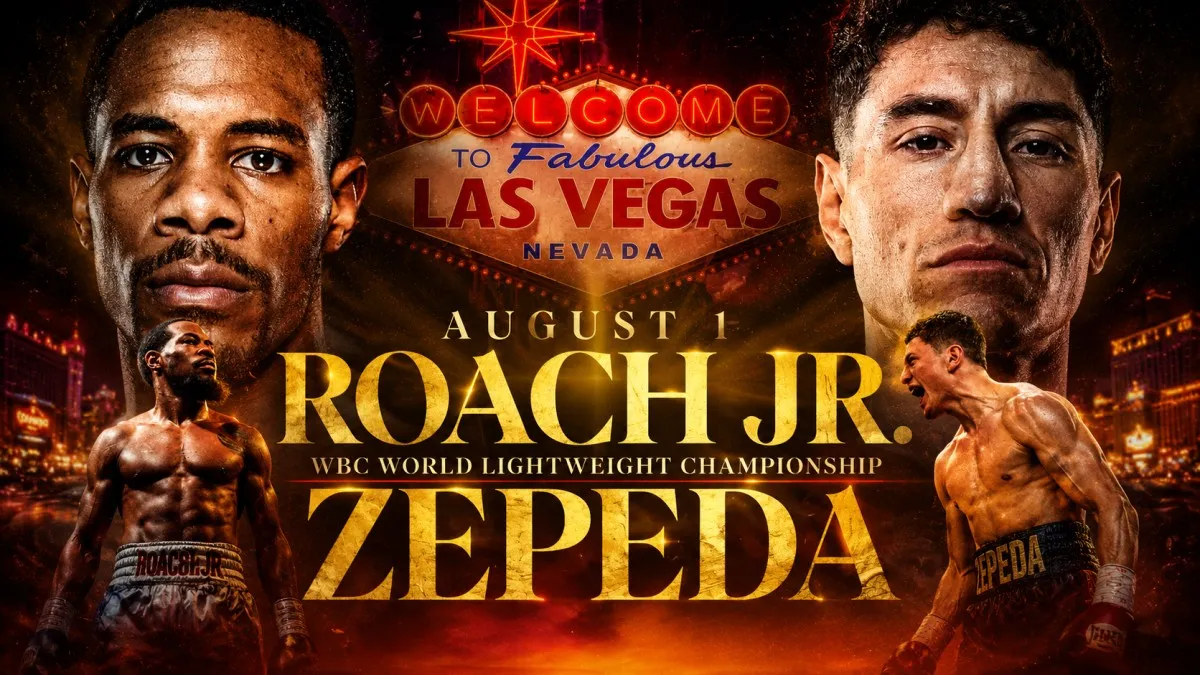
Saturday night’s second edition of the new TNT/DAZN monthly boxing series, “The Fight,” features two lightweight title fights starring boxers from three former heated rivals, as Al Haymon’s Premier Boxing Champions sends Lamont Roach Jnr to meet No. 1 contender William Zepeda of Oscar De La Hoya’s Golden Boy Promotions while Bob Arum’s Top Rank offers an IBF-title fight pitting champion Raymond Muratalla versus Brazil’s former Olympic gold medalist Robson Conceicao.
“It’s a beautiful thing. We should always be doing it,” Top Rank’s Hall of Fame matchmaker Brad Goodman said about the cross-promotion.
Just more than a decade ago, the odds of such a card happening were effectively nil.
Powerful manager Haymon raided all his fighters from De La Hoya’s stable, and Top Rank sued Haymon alleging monopolistic practices, discouraging a wealth of superb fights from being made and accelerating the sport’s slide from mainstream to niche.
But now, as the Saudi Arabia-enriched new promotion Zuffa Boxing has formed this year and begun signing free-agent talent while the established promotions have each joined streaming partner DAZN, the cooperation and the quality of fights has escalated.
“Everybody knows that we’re trying to rebuild boxing and DAZN has given everybody the window to do that,” Top Rank’s Arum said.
Zuffa Boxing head Dana White, working for the parent company TKO Group Holdings that includes White’s UFC and Nick Khan’s WWE, has said he expects his company to ultimately dominate the sport and sign up an abundance of talent after recently landing former Top Rank fighter Shakur Stevenson, an unbeaten four-division champion.
Saudi Arabia boxing financier Turki Alalshikh owns 60% of Zuffa Boxing.
“No, I don’t look at Zuffa Boxing as being a competitor,” Arum said. “Frankly, I mean, they’re dependent on Turki [Alalshikh] and Saudi Arabia putting up money, to do fights. And, with what’s happening in the Mideast [the war with Iran], it doesn’t look like there’ll be funds forthcoming for anything in boxing, other than maybe one or two fights that do take place in Riyadh. And with what’s going on now. I don’t think they’d even look to do that, you know?”
After joining DAZN earlier this year following an eight-year run with ESPN, Arum described the alliance with PBC, Golden Boy and British promoters Matchroom and Queensberry on DAZN as “seamless.”
“Everybody is a professional and there’s no back and forth,” Arum said. “There’s nothing [connected to past acrimony] … we’re putting on our fight, Al’s putting on his fight, Oscar’s the lead promoter. There hasn’t been even a second of friction.”
Tom Brown, the head of TGB Promotions who stages PBC fights, said it reminds him of the late 1990s when he worked as a matchmaker with Arum’s Hall of Fame matchmaker Bruce Trampler while De La Hoya was fighting for Top Rank.
“It’s a chance for [Roach] to become a two-division world champion and win the WBC lightweight title. It was a no-brainer,” Brown said. “We’ve done great business the last two years with Golden Boy [Ryan Garcia-Gervonta Davis in 2023, Canelo Alvarez-Jaime Munguia in 2024 and David Benavidez-Gilberto Ramirez and Ryan Garcia-Mario Barrios this year).
“When it’s time to make good business, all that shit goes out the window. We can get right back to [any grudges] next week,” Brown laughed.
“There’s still going to be competition like there is in any business, likes and dislikes where it can be harder to do business. But if you have to, you do it because you’ve got to do it for your fighters.”
De La Hoya, who sought out major co-promoted events against the likes of Felix Trinidad and Shane Mosley when he fought, said that’s the primary motivation for the alliances with the others.
“It’s only positive for boxing. It’s only positive for the fighters. You must work with every promoter to make the best fights. That’s the bottom line,” De La Hoya said. “The fighters love it because they want to fight the best. This is a perfect example of promoters working together to give you the best possible action.”
De La Hoya is sending Garcia to meet Zuffa Boxing’s No. 1 welterweight contender Conor Benn September 12 at T-Mobile Arena in Las Vegas.
A vocal critic of Zuffa Boxing and its methods, De La Hoya said the promoters’ mutual competitor doesn’t deserve credit for spurring this cooperation.
“This was going to happen organically anyway, and I’ve always preached, before Zuffa was even a thing, to work with other promoters to get the best fights,” De La Hoya said.
“The one thing about every other promoter is that they’ve never laced up the gloves like myself, so I know first-hand what a fighter needs, wants and desires to make those big fights happen and to win world titles. You must work with everybody. This is something I’ve been preaching for a long time, and, hopefully, it continues with the other promoters, because this is what the boxing world really needs.”
De La Hoya’s comments came after he went to Capitol Hill in April to urge the Senate not to follow Zuffa Boxing’s proposal to change the existing Ali Act that forbids a promotion from ranking and awarding belts to its fighters, and also requires contract disclosures while discouraging onerous contracts.
A revised Zuffa-backed Ali Act was introduced to the Senate Thursday changing fighter debut contracts to three years, not six, while permitting cooperation with sanctioning bodies, which, by extension, encourages co-promotion.
“Let me tell you one thing: [Zuffa Boxing] has a lot of money. They’re very powerful. For crying out loud, Donald Trump owns stock in TKO,” De La Hoya said. “Talk about a conflict of interest.
“What I can do is continue to speak my voice and make sure fighters know what they’re getting themselves into. That’s the bottom line. We have to unite as promoters, as organizations, because the fighters want to fight for world titles and the belts. They don’t want to fight for the unicorn [Zuffa] belt.”
Ensuring “The Fight” becomes a known draw to boxing fans and that DAZN gains more subscribers as the mutual home provides an abundance of incentive to strengthen the partnerships, said Arum.
“I don’t even think twice about it. I don’t think anybody else does, as long as they can get their fighters a [strong] position, what difference does [co-promotion] make?” he said.
“We always knew that [PBC, Golden Boy] were professional. We dealt with them over the years. There’s no individual that’s looking to take the spotlight, and not acknowledge the other promoters that they’re working with. This is the way normal people react.”
If keeping up walls between promotions contributed to the sport’s downturn in business – with HBO, Showtime and ESPN exiting – De La Hoya foresees competitive bouts pitting gifted fighters and compelling storylines such as, ‘Will the Roach-Zepeda winner meet the Muratalla-Conceicao winner?’ providing a significant opportunity for boxing to rally.
“It’s a great possibility and lead-in. The fans will watch a great main event, and get a great co-main, with prospects… knowing that’s what all the promoters are doing now – coming together to make the best fights,” De La Hoya said.
